

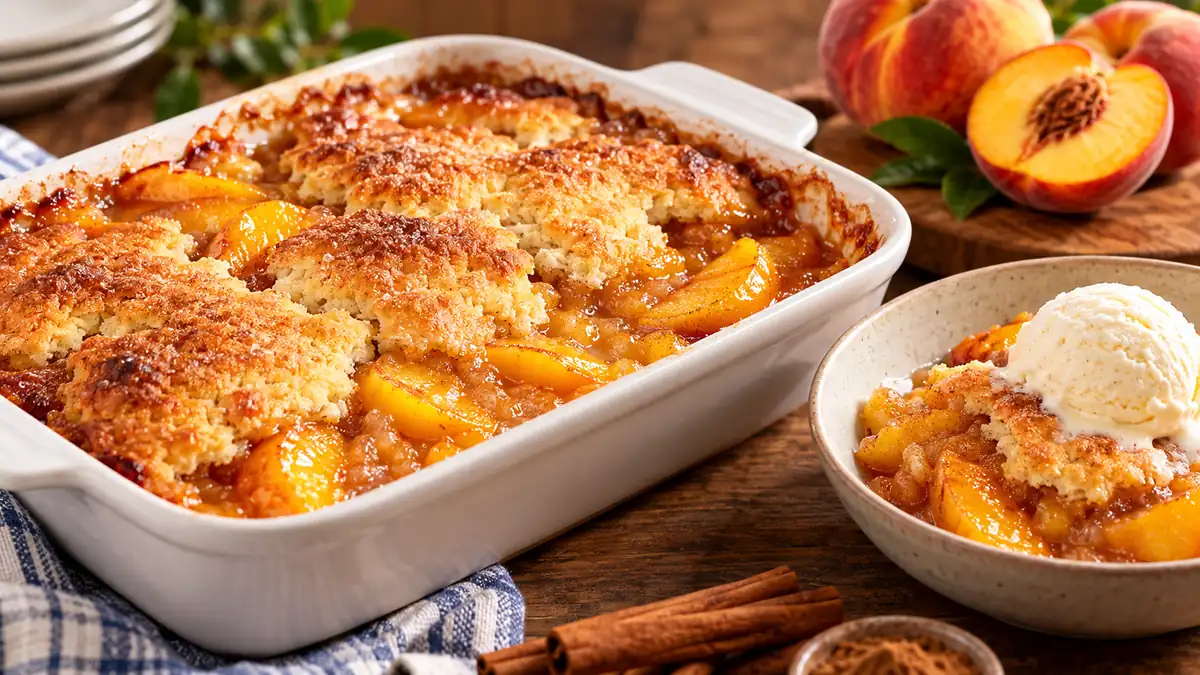
A great peach cobbler combines tender, juicy peaches with a golden, buttery topping that is slightly crisp on the outside and soft underneath. The secret is balancing the sweetness of the fruit, the thickness of the filling, and the texture of the batter.
peach cobbler is a traditional baked dessert made with sweetened peaches covered by a biscuit-like, cake-style, or pastry topping. As it bakes, the peaches release flavorful juices while the topping turns golden brown. It can be prepared with fresh, frozen, or canned peaches and is commonly served warm with vanilla ice cream.
This guide explains how to make a classic homemade version, choose the right peaches, avoid a watery filling, and adjust the recipe for different ingredients.
What Is peach cobbler?
Peach cobbler is a fruit dessert associated with American home cooking, particularly Southern cuisine. It typically consists of sliced peaches, sugar, butter, flour, and a baked topping.
Unlike a traditional pie, cobbler does not require a bottom crust. Its topping is generally less structured, giving the finished dessert a rustic appearance.
There are several popular styles:
- Biscuit-style cobbler: Soft dough is dropped over the fruit and baked until golden.
- Cake-style cobbler: A pourable batter rises around the peaches as the dessert bakes.
- Pastry-style cobbler: A rolled pastry crust covers the fruit, producing a more pie-like finish.
All three styles emphasize the natural flavor of peaches, although their textures differ considerably.
Why Is It Called Cobbler?
The name is commonly associated with the uneven, cobbled appearance of dough placed over baked fruit.
Early American cooks developed practical fruit desserts using available ingredients and cooking equipment. Over time, regional variations became part of American baking traditions.
Today, peach cobbler remains especially popular during summer, when fresh peaches are in season.
Ingredients for Homemade peach cobbler
This recipe uses a simple cake-style batter that develops a tender center and lightly crisp edges.
Recipe overview
Prep
15 min
Bake
40–45 min
Servings
8
Ingredients for the Peach Filling
| Ingredient | Quantity |
|---|---|
| Fresh peaches, sliced | 6 cups (about 900 g) |
| Granulated sugar | ½ cup |
| Lemon juice | 1 tablespoon |
| Cornstarch | 1 tablespoon |
| Ground cinnamon | ½ teaspoon |
| Ground nutmeg | ⅛ teaspoon |
| Vanilla extract | 1 teaspoon |
Ingredients for the Cobbler Topping
| Ingredient | Quantity |
|---|---|
| All-purpose flour | 1 cup (125 g) |
| Granulated sugar | ¾ cup |
| Baking powder | 2 teaspoons |
| Salt | ¼ teaspoon |
| Whole milk | ¾ cup |
| Unsalted butter | ½ cup (113 g) |
These quantities are suitable for a 9 × 13-inch baking dish.
The filling uses cornstarch to help thicken the peach juices. The topping uses baking powder for lift, milk for moisture, and melted butter for a rich flavor.
Choosing the Best Peaches
Ripe but firm peaches are ideal for baking. They should smell fragrant and yield slightly when gently pressed.
Overripe peaches can release excessive moisture and lose their shape, while underripe peaches may remain firm and lack sweetness.
Yellow peaches are a popular choice because their bright flavor balances the sugar and buttery topping. White peaches can also be used, although their flavor is generally milder and less acidic.
How to Make peach cobbler Step by Step

Step 1: Prepare the peaches
Preheat the oven to 350°F (175°C). Combine sliced peaches, sugar, lemon juice, cornstarch, cinnamon, nutmeg, and vanilla in a large bowl. Toss gently and let stand for 5–10 minutes.

Step 2: Melt the butter
Place the butter in a 9 × 13-inch baking dish and put it in the preheating oven until melted. Remove carefully and distribute the butter evenly across the bottom.

Step 3: Mix the batter
Whisk flour, sugar, baking powder, and salt together. Add the milk and stir just until the mixture becomes smooth. Avoid excessive mixing, which can make the topping tougher.

Step 4: Assemble the cobbler
Pour the batter evenly over the melted butter without stirring. Spoon the peach mixture over the batter, distributing the fruit and juices evenly. Do not mix the layers.

Step 5: Bake until golden
Bake for approximately 40–45 minutes, or until the topping is golden brown, the center is set, and the peach filling bubbles around the edges. Add a few minutes if the center remains wet.

Step 6: Cool and serve
Allow the cobbler to rest for 15–20 minutes before serving. This helps the fruit juices thicken and makes the dessert easier to portion.
How Do You Know When Cobbler Is Done?
A properly baked cobbler has three visible characteristics: a golden topping, bubbling fruit filling, and a center that no longer looks like raw batter.
The topping should feel set when lightly touched. A toothpick inserted into a batter-only area should come out without wet batter, although peach juices may still cling to it.
Because oven temperatures vary, visual signs are more reliable than baking time alone.
Fresh vs. Frozen vs. Canned Peaches
One advantage of homemade peach cobbler is that it does not depend entirely on fresh seasonal fruit.
| Peach type | Preparation | Best consideration |
|---|---|---|
| Fresh | Wash, pit, and slice | Best control over texture and sweetness |
| Frozen | Thaw and drain excess liquid | Convenient throughout the year |
| Canned | Drain syrup or juice | Quickest preparation |
| Canned pie filling | Usually ready to use | Already sweetened and thickened |
Making peach cobbler With Frozen Peaches
Frozen peaches work well, especially when fresh fruit is unavailable.
Thaw the peaches in the refrigerator and drain excess liquid before combining them with the other filling ingredients. This prevents extra moisture from making the dessert soupy.
If the fruit remains particularly juicy, slightly increase the cornstarch. Frozen peaches may also need a few extra minutes in the oven if they are still cold when assembled.
Making peach cobbler With Canned Peaches
Canned peaches are a practical option for a quick dessert.
For this recipe, use approximately three to four 15-ounce cans, depending on the drained weight. Aim for about six cups of drained peach slices.
Peaches packed in juice are generally easier to adjust for sweetness. If using fruit packed in heavy syrup, drain thoroughly and reduce the sugar in the filling.
Canned peaches are already softened, so avoid prolonged mixing that might break them apart.
Should You Peel Peaches for Cobbler?
Peeling is optional.
Peach skins soften during baking and add color and fiber. However, some people prefer peeled peaches for a smoother filling.
To peel easily, place ripe peaches in boiling water for approximately 30–60 seconds, then transfer them to an ice bath. The skins should loosen and become easier to remove.
For firmer fruit, a vegetable peeler may work better.
Tips for Making the Best peach cobbler
A reliable cobbler depends on a few simple baking techniques rather than complicated equipment.
Keep the Peach Filling From Becoming Watery
Peaches contain a substantial amount of water, which is released during baking.
To control the liquid:
- Use firm-ripe peaches instead of extremely soft fruit.
- Drain thawed frozen peaches and canned peaches thoroughly.
- Add cornstarch to thicken the juices.
- Bake until the filling bubbles, allowing the starch to thicken properly.
- Let the finished cobbler rest before serving.
If the filling looks runny immediately after baking, it may simply need additional cooling time.
Avoid Overmixing the Batter
Once flour comes into contact with milk, gluten begins to develop. Excessive stirring can make the topping dense or chewy.
Mix only until the dry ingredients are incorporated. Small lumps are generally acceptable.
Do Not Stir the Layers
In this cake-style recipe, the butter, batter, and fruit are deliberately layered.
During baking, the batter expands and rises around the peaches, producing a distinctive golden surface.
Stirring everything together can interfere with that texture and create unevenly cooked areas.
This layering method is also used in established Southern-style cobbler recipes.

Food Network
+1
Adjust Sweetness Based on the Fruit
Peach sweetness varies with variety, ripeness, and season.
Taste a slice before adding sugar. Very sweet peaches may need less sugar, while tart fruit may benefit from the full amount.
Lemon juice adds acidity and helps prevent the dessert from tasting overly sweet.
Common peach cobbler Problems and How to Fix Them
| Problem | Likely cause | Solution |
|---|---|---|
| Watery filling | Excess fruit juice or insufficient thickening | Drain fruit, use cornstarch, and cool before serving |
| Soggy topping | Underbaking or excess moisture | Bake until the center is set and the filling bubbles |
| Dry cobbler | Too much flour or overbaking | Measure flour accurately and check the oven early |
| Tough topping | Overmixed batter | Mix only until combined |
| Burnt edges | Oven too hot or uneven heating | Check oven temperature and loosely cover browned edges with foil |
| Overly sweet flavor | Very sweet fruit or canned syrup | Reduce added sugar and use lemon juice |
| Hard peaches | Underripe fruit | Use ripe peaches or soften firm fruit before assembling |
Why Is My Cobbler Doughy in the Middle?
A doughy center usually means the batter has not finished cooking.
This can happen when the fruit contains too much liquid, the baking dish is unusually deep, or the oven runs cooler than its displayed temperature.
Continue baking in 5-minute increments until the center sets. If the top is already brown, loosely cover it with aluminum foil.
How Do You Make a Crispy Cobbler Topping?
For a more golden, lightly crisp surface, use the correct butter quantity and avoid excess fruit liquid.
A small sprinkle of granulated sugar over the exposed batter can encourage surface browning.
For a distinctly crunchy biscuit topping, a separate biscuit-style recipe with cold butter and a cinnamon-sugar finish is a better choice.
Sally’s Baking
peach cobbler Variations and Substitutions
Once the basic recipe is familiar, several variations can change its flavor and texture without requiring a completely different dessert.
Southern-Style Peach Cobbler
Southern-style versions commonly feature sweet peaches, butter, and a golden crust. Some use cake-like batter, while others have biscuit or pastry toppings.
A little cinnamon and nutmeg complements the fruit, but the peach flavor should remain dominant.
For a more traditional biscuit-style variation, use a topping made with flour, cold butter, baking powder, and buttermilk.
Peach Cobbler With Brown Sugar
Replace part of the granulated sugar in the filling with light brown sugar.
Brown sugar contributes a mild molasses flavor that pairs particularly well with cinnamon, vanilla, and baked peaches.
It also produces a slightly deeper caramel-like taste.
Gluten-Free Peach Cobbler
A gluten-free version can be made with a suitable one-to-one gluten-free baking flour blend.
Choose a blend intended for baking and follow its substitution guidance. Some blends absorb liquid differently, so the topping may require a minor milk adjustment.
Check that the baking powder and other packaged ingredients are labeled gluten-free when preparing the dessert for someone with celiac disease.
Dairy-Free Peach Cobbler
Replace regular butter with a dairy-free baking alternative and use unsweetened plant-based milk.
Oat milk and almond milk are common options. The finished texture may differ slightly depending on the fat and protein content of the substitutes.
Peach and Berry Cobbler
Blueberries, raspberries, or blackberries can be combined with peaches for a more colorful filling.
Replace approximately one cup of the sliced peaches with berries, keeping the total fruit volume close to six cups.
Because berries can release additional liquid, monitor the filling consistency and adjust the thickener if needed.
Slow Cooker Peach Cobbler
A slow cooker can prepare cobbler without a conventional oven, although the topping usually stays softer and less crisp.
Slow cooker recipes require different liquid ratios and cooking times. They are best followed as separate recipes rather than directly transferring an oven recipe.
Food Network, for example, features a slow cooker version using frozen peaches.
Food Network
peach cobbler vs. Peach Crisp, Crumble, and Pie
These desserts may use similar fruit fillings, but their toppings distinguish them.
| Dessert | Topping | Typical texture |
|---|---|---|
| Peach cobbler | Biscuit, cake batter, or pastry | Soft and golden, sometimes crisp at the edges |
| Peach crisp | Oats, flour, sugar, and butter | Crunchy and crumbly |
| Peach crumble | Flour, sugar, and butter | Crumbly, often without oats |
| Peach pie | Rolled pastry crust | Flaky, structured crust |
| Peach buckle | Cake batter with fruit | Cake-like with fruit distributed throughout |
Is Cobbler Supposed to Have a Bottom Crust?
Not necessarily.
Many modern cobblers have no bottom crust, and the fruit sits directly in the baking dish. Some regional and family recipes use pastry underneath or between layers of peaches.
Both approaches are recognized variations rather than a single universal standard.
Is Peach Cobbler the Same as Peach Pie?
No. A peach pie generally has a defined pastry shell, often with a top crust or lattice.
Cobbler is more rustic and can be spooned directly from the baking dish. It usually requires less pastry preparation and shaping.
How to Store, Freeze, and Reheat peach cobbler
Proper storage helps preserve the fruit filling and reduces the risk of spoilage.
How Long Does Peach Cobbler Last?
Allow the cobbler to cool briefly, then cover and refrigerate it within two hours of baking.
For best quality, consume refrigerated leftovers within three to four days.
Use an airtight container or tightly covered baking dish to prevent the topping from drying out and absorbing refrigerator odors.
Can You Freeze Peach Cobbler?
Yes. Baked cobbler can be frozen, although the topping may become softer after thawing.
Let the dessert cool, divide it into portions, and place them in freezer-safe containers.
For best quality, use within approximately two to three months.
Thaw overnight in the refrigerator before reheating.
Best Way to Reheat Peach Cobbler
The oven is generally the best method for restoring the topping’s texture.
- Preheat the oven to 350°F (175°C).
- Place the refrigerated cobbler in an oven-safe dish.
- Cover loosely with foil to prevent excessive browning.
- Heat for approximately 15–20 minutes, or until hot throughout.
- Remove the foil for the final few minutes if a firmer topping is desired.
Individual servings can also be reheated in the microwave, although the topping will remain softer.
What to Serve With Peach Cobbler


10
Peach cobbler is flavorful enough to serve on its own, but simple accompaniments can add contrast.
Vanilla ice cream is the classic choice because its cold, creamy texture balances the warm fruit and buttery topping.
Freshly whipped cream provides a lighter alternative. A spoonful of lightly sweetened Greek yogurt can add tanginess, while toasted pecans provide crunch.
For a richer presentation, a small drizzle of caramel sauce works well, especially when the filling is not overly sweet.
Serve the cobbler warm rather than piping hot so the filling has time to settle.
Can You Make Peach Cobbler Ahead of Time?
Yes, although the best preparation method depends on how far ahead it needs to be made.
For same-day serving, prepare the peach filling and measure the dry topping ingredients separately. Refrigerate the fruit mixture and combine the batter shortly before baking.
Avoid leaving fully mixed baking-powder batter standing for extended periods, because it may lose some of its rising ability.
For preparation one day ahead, bake the cobbler completely, refrigerate it after cooling, and reheat before serving.
Freshly baked cobbler generally has the best topping texture, but reheated portions can still be enjoyable.
Nutritional Information and Portion Size
Peach cobbler contains fruit, but it is also a dessert with added sugar, butter, and refined flour.
A typical serving provides carbohydrates and fat, with smaller amounts of protein and fiber.
For the recipe in this guide, an approximate nutritional estimate per serving, assuming eight equal portions, is:
| Nutrient | Approximate amount |
|---|---|
| Calories | 390 kcal |
| Carbohydrates | 65 g |
| Fat | 13 g |
| Protein | 4 g |
| Fiber | 2 g |
These figures are estimates rather than laboratory-tested values. Actual nutrition depends on peach variety, ingredient brands, substitutions, and portion size.
To reduce added sugar, start by decreasing the sugar in the fruit filling. Naturally sweet, ripe peaches may need very little extra sweetening.
Smaller portions can also make it easier to enjoy cobbler as part of a balanced diet.
Final Thoughts on Making peach cobbler
Homemade peach cobbler is a straightforward dessert built around juicy fruit, simple pantry ingredients, and a golden baked topping.
The most important techniques are choosing ripe but firm peaches, controlling excess moisture, measuring the batter accurately, and allowing enough time for the filling to thicken.
Fresh peaches offer excellent seasonal flavor, but frozen and canned fruit can also produce satisfying results with a few adjustments.
For a dependable first attempt, follow the classic butter-and-batter method, keep the layers separate, and bake until the top is golden and the fruit is bubbling. Serve warm with vanilla ice cream for a comforting homemade dessert.
