

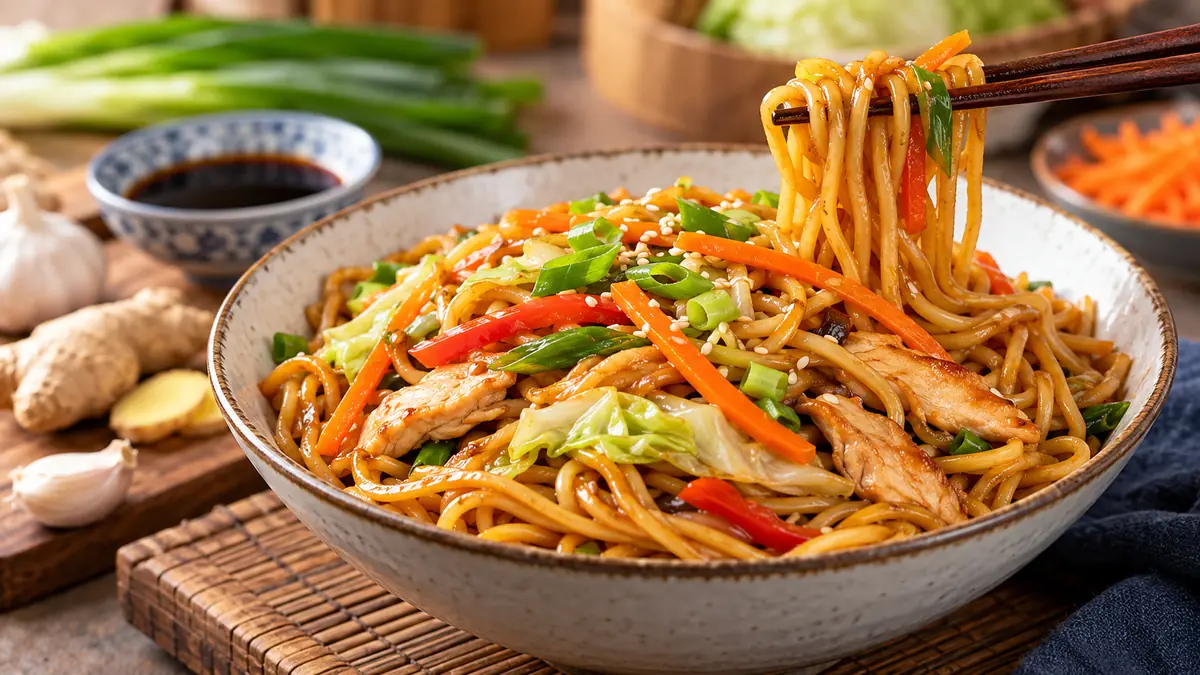
Craving restaurant-style Chinese noodles with a savory sauce, tender vegetables, and a satisfying chewy texture? lo mein is one of the easiest Chinese-inspired dishes to prepare at home, and it requires only a few everyday ingredients.
lo mein is a Chinese noodle dish made with cooked wheat-based noodles, vegetables, proteins, and a savory sauce. The noodles are boiled first, then tossed with ingredients such as soy sauce, garlic, sesame oil, cabbage, and chicken or shrimp. Unlike crispy chow mein, lo mein typically has a soft, springy texture and a glossy coating of sauce.
Its flexibility makes it particularly useful for quick dinners. You can prepare a simple vegetable version, add your favorite protein, or adjust the sauce to suit your taste.
What Is lo mein?
lo mein is a traditional Chinese noodle preparation that has become especially popular in Chinese-American cuisine. The name comes from Chinese terms meaning mixed, stirred, or tossed noodles.
The dish is commonly associated with Cantonese cooking, which originated in southern China, particularly Guangdong province.
Traditional Cantonese preparations often involve cooked noodles served with a relatively light sauce and toppings. Chinese-American restaurant versions frequently combine noodles, vegetables, meat, and a richer soy-based sauce in a wok.
The defining characteristic is the cooking technique: the noodles are cooked before being combined with the other ingredients.
What Does lo mein Taste Like?
The flavor is primarily savory, with subtle sweetness and aromatic notes from garlic, ginger, and sesame oil.
A well-balanced bowl generally offers:
- A rich umami flavor from soy sauce and oyster sauce.
- Mild sweetness that balances the saltiness.
- Aromatic garlic and ginger.
- Soft but pleasantly chewy noodles.
- Fresh, lightly crisp vegetables.
The sauce should coat the noodles evenly without leaving a large pool of liquid at the bottom of the bowl.
Where Did lo mein Originate?
The dish has roots in Chinese noodle traditions, particularly Cantonese cuisine.
Over time, Chinese immigrant communities adapted noodle dishes to locally available ingredients and restaurant preferences in the United States.
As a result, Chinese-American lo mein developed into a recognizable takeout favorite featuring generous portions of noodles, vegetables, protein, and brown sauce.
Both the traditional and Chinese-American styles share the essential idea of mixing cooked noodles with flavorful accompaniments.

The Woks of Life
+2
lo mein vs. Chow Mein: What’s the Difference?
Although lo mein and chow mein often contain similar ingredients, their cooking techniques and textures are different.
The names provide an explanation: lo mein refers to tossed or mixed noodles, while chow mein refers to stir-fried noodles.
| Feature | lo mein | Chow Mein |
|---|---|---|
| Cooking method | Boiled, then tossed | Stir-fried or fried |
| Noodle texture | Soft and chewy | Firmer, sometimes crispy |
| Sauce | Usually more evenly coated | Often lighter or less saucy |
| Noodle thickness | Often medium or thick | Often thinner |
| Appearance | Glossy, flexible strands | Can have browned edges |
| Common preparation | Tossed with sauce and toppings | Cooked over higher heat |
The distinction is not absolute. Some restaurant-style lo mein recipes briefly stir-fry the cooked noodles, while certain regional chow mein dishes are soft rather than crispy.
The most reliable distinction is the emphasis on tossing cooked noodles versus frying them for additional texture.
HelloFresh
+2
Is lo mein Healthier Than Chow Mein?
Neither dish is automatically healthier.
Nutrition depends on portion size, cooking oil, sodium, sauce, vegetables, and protein.
A vegetable-heavy lo mein prepared with moderate oil and reduced-sodium soy sauce may be a balanced meal. However, a large restaurant portion with a salty sauce can contain considerable sodium and calories.
Similarly, lightly stir-fried chow mein may contain less oil than a heavily sauced noodle dish, while deep-fried crispy versions can contain more.
What Ingredients Are Used in lo mein?
A good homemade version combines four components: noodles, vegetables, protein, and sauce.


6
1. Noodles
Traditional lo mein noodles are generally made from wheat flour and eggs, giving them a yellow color and springy texture.
Common choices include fresh Chinese egg noodles, refrigerated cooked noodles, and dried egg noodles.
Fresh noodles usually offer the most familiar restaurant-style texture.
If authentic noodles are unavailable, spaghetti or linguine can work as substitutes, although their texture will be different.
2. Vegetables
Popular vegetables include carrots, cabbage, bok choy, broccoli, mushrooms, snow peas, bell peppers, bean sprouts, and green onions.
Cut vegetables into thin, similarly sized pieces so they cook quickly and evenly.
Leafy vegetables should be added toward the end because they soften faster than carrots or broccoli.
3. Protein
The dish works with several proteins:
- Chicken breast or thigh
- Thinly sliced beef
- Peeled shrimp
- Pork
- Firm tofu
- Eggs
Protein is optional. Vegetable lo mein can be satisfying without meat, especially when prepared with tofu or mushrooms.
4. Sauce
A typical Chinese-American lo mein sauce uses light soy sauce, dark soy sauce, oyster sauce, sesame oil, and a small amount of sugar.
Garlic, ginger, white pepper, and stock or water add depth.
Light soy sauce primarily provides seasoning, while dark soy sauce contributes a deeper color and some sweetness.
Oyster sauce adds umami, but it contains shellfish ingredients unless a vegetarian alternative is used.
How to Make lo mein at Home
Homemade lo mein takes approximately 25–30 minutes when the ingredients are prepared in advance.
Prep: 15 minutes
Cook: 10–15 minutes
Servings: 4

Ingredients for Easy Homemade lo mein
| Ingredient | Quantity |
|---|---|
| Fresh lo mein noodles | 12 oz (340 g) |
| Boneless chicken, thinly sliced | 8 oz (225 g) |
| Carrots, julienned | 1 medium |
| Shredded cabbage | 2 cups |
| Bell pepper, sliced | 1 |
| Green onions | 3 |
| Garlic, minced | 3 cloves |
| Fresh ginger, minced | 1 tsp |
| Neutral cooking oil | 2 tbsp |
For the sauce:
| Ingredient | Quantity |
|---|---|
| Light soy sauce | 2 tbsp |
| Dark soy sauce | 1 tsp |
| Oyster sauce | 1 tbsp |
| Sesame oil | 1 tsp |
| Sugar | 1 tsp |
| Water or unsalted chicken stock | 2 tbsp |
| White pepper | A pinch |
The ingredient quantities are flexible. For a vegetarian version, replace chicken with tofu and use mushroom-based vegetarian stir-fry sauce instead of oyster sauce.
Step 1: Prepare the Noodles
Bring a large pot of water to a boil.
Cook the noodles according to their package instructions until tender but still slightly firm.
Fresh egg noodles often cook quickly, while dried noodles require more time.
Drain thoroughly. Rinse briefly if recommended for your noodle type to remove excess starch and stop further cooking.
Avoid overcooking because the noodles will be heated again with the sauce.
Step 2: Mix the Sauce
In a small bowl, combine light soy sauce, dark soy sauce, oyster sauce, sesame oil, sugar, water, and white pepper.
Stir until the sugar dissolves.
Mixing the sauce beforehand prevents individual ingredients from burning or concentrating in one area of the wok.
Step 3: Cook the Chicken
Heat one tablespoon of oil in a large wok or skillet over medium-high heat.
Add the sliced chicken in a single layer.
Cook for approximately 4–6 minutes, stirring occasionally, until fully cooked. The chicken should reach an internal temperature of 165°F (74°C).
Transfer it to a clean plate.
Avoid crowding the pan. If necessary, cook the chicken in batches.
Step 4: Stir-Fry the Vegetables
Add the remaining oil to the wok.
Cook the garlic and ginger briefly until fragrant, about 15–30 seconds.
Add carrots and bell peppers, stirring for approximately two minutes.
Next, add cabbage and continue cooking until the vegetables begin to soften but retain a little crunch.
Step 5: Combine Everything
Return the cooked chicken to the wok.
Add the drained noodles and prepared sauce.
Using tongs or two spatulas, gently lift and toss the noodles until everything is evenly coated.
Cook for another one to two minutes, just long enough to heat the noodles and distribute the sauce.
If the mixture appears dry, add a tablespoon of water or stock.
Step 6: Garnish and Serve
Add the sliced green onions and toss briefly.
Serve immediately while the noodles are hot.
A properly prepared bowl should have glossy noodles, evenly distributed vegetables, and a sauce that clings to the strands.
Best Noodles for lo mein and How to Cook Them
Choosing the correct noodles makes a noticeable difference.
Chinese egg noodles have a springy, slightly elastic texture that ordinary pasta cannot perfectly reproduce.
According to cooking guidance from The Woks of Life, proper draining, noodle preparation, and moisture control are particularly important for avoiding sticky, soggy, or dry results.
The Woks of Life
+1
Fresh vs. Dried Noodles
| Noodle type | Texture | Preparation |
|---|---|---|
| Fresh Chinese egg noodles | Soft and springy | Usually boil briefly |
| Precooked refrigerated noodles | Tender and chewy | Loosen and heat |
| Dried Chinese egg noodles | Firm and springy | Boil according to package |
| Spaghetti | Firmer, less elastic | Boil until al dente |
| Rice noodles | Softer, different bite | Follow package directions |
Rice noodles are not a traditional direct replacement because they produce a noticeably different dish.
For the closest restaurant-style result, use Chinese wheat-and-egg noodles.
How Do You Keep Noodles From Sticking?
Sticky noodles are usually caused by excess starch, insufficient draining, or allowing cooked strands to sit together too long.
Cook them according to the package directions, drain well, and separate them gently before adding them to the wok.
If the noodles need to sit for several minutes, a very small amount of neutral oil can help prevent clumping.
Avoid adding large quantities of oil, which can make the finished dish greasy.
Popular Types of lo mein
One reason lo mein is so versatile is that the noodle base works with different proteins and vegetables.

Chicken lo mein
Features tender chicken, cabbage, carrots, and noodles coated in a savory brown sauce. Chicken thighs provide a richer texture, while chicken breast is leaner.

Beef lo mein
Uses thinly sliced beef, often flank steak or sirloin. Cutting against the grain helps keep the beef tender.

Shrimp lo mein
Combines shrimp with springy noodles and vegetables. Shrimp cooks quickly, so it should not be left in the hot pan longer than necessary.

Vegetable lo mein
Features mushrooms, cabbage, broccoli, carrots, and other vegetables. Tofu or edamame can add protein.
Other variations include roast pork lo mein, tofu lo mein, and mixed-protein combinations.
Tips for Making Restaurant-Style lo mein
A successful noodle dish depends more on technique than on complicated ingredients.
Use a Hot Wok or Large Skillet
A wok provides ample room for tossing noodles and vegetables.
However, a large nonstick or stainless-steel skillet also works well.
Keep the heat reasonably high when cooking vegetables, but reduce it if the garlic or sauce begins to burn.
Prepare Everything Before Cooking
Stir-frying moves quickly.
Chop vegetables, measure the sauce, cook the noodles, and prepare the protein before heating the wok.
This approach prevents overcooking while you search for ingredients.
Avoid Adding Too Much Sauce
More sauce does not necessarily produce better noodles.
Excess liquid can make the dish watery, salty, or overly soft.
Begin with the recommended quantity and add small amounts of water or sauce only if needed.
Cook in Smaller Batches
Crowding the pan traps steam and reduces effective stir-frying.
If doubling the recipe, cook the vegetables and protein in batches and combine everything at the end.
Balance the Flavor
Taste before serving.
If the dish seems too salty, add a small amount of water and more unsalted vegetables or noodles.
If it tastes flat, a little additional soy sauce or oyster sauce may help.
For extra heat, add chili oil, crushed red pepper, or chili crisp according to preference.
Common lo mein Mistakes and How to Fix Them
Even simple noodle recipes can go wrong when moisture and heat are not controlled.
| Problem | Likely cause | Solution |
|---|---|---|
| Mushy noodles | Overcooking | Reduce boiling time |
| Sticky noodles | Excess starch or clumping | Drain and separate strands |
| Dry noodles | Insufficient moisture | Add a little stock or water |
| Greasy texture | Too much cooking oil | Measure oil carefully |
| Bland flavor | Weak seasoning | Adjust sauce gradually |
| Excessively salty | Too much soy sauce | Add unsalted ingredients |
| Soggy vegetables | Overcrowded pan | Cook in smaller batches |
| Tough chicken | Overcooking | Slice evenly and cook just until done |
One especially common mistake is adding uncooked dried noodles directly to a wok with vegetables and sauce.
Most dried egg noodles must be boiled separately before being tossed with the other ingredients.
Is lo mein Healthy? Nutrition and Dietary Considerations
lo mein can fit into a balanced eating pattern, but its nutritional profile varies considerably.
Noodles supply carbohydrates, vegetables contribute fiber and micronutrients, and chicken, beef, shrimp, or tofu can provide protein.
The main considerations are portion size, sodium, oil, and the ratio of noodles to vegetables.
How Many Calories Are in lo mein?
There is no single accurate calorie count for every serving.
A homemade vegetable version with moderate oil may contain substantially fewer calories than a large restaurant portion containing extra sauce, meat, and cooking oil.
For a reliable estimate, calculate the ingredients used in your particular recipe and divide the total by the number of servings.
Is lo mein Gluten-Free?
Traditional lo mein is not gluten-free because the noodles are usually made from wheat flour.
Regular soy sauce also typically contains wheat.
A gluten-free adaptation requires suitable gluten-free noodles and certified gluten-free sauces.
Rice noodles can be used, but the resulting texture will differ from conventional lo mein.
Is lo mein Vegan?
Not necessarily.
Traditional egg noodles contain eggs, while oyster sauce contains shellfish-derived ingredients.
A vegan version can use egg-free wheat noodles, tofu, vegetables, and a plant-based mushroom stir-fry sauce.
Check ingredient labels carefully, particularly for packaged sauces.
How Can You Make It Lower in Sodium?
Use reduced-sodium soy sauce, unsalted stock, and smaller amounts of prepared sauces.
Increasing the vegetable-to-noodle ratio can also make the dish more filling without relying on additional sauce.
How to Store and Reheat lo mein
Leftover noodles can be convenient for another meal, provided they are stored and reheated safely.
Refrigerating Leftovers
Transfer the noodles into shallow, airtight containers and refrigerate promptly, within two hours of cooking.
Keep the refrigerator at 40°F (4°C) or below.
Properly refrigerated leftovers should generally be eaten within three to four days.
Can You Freeze lo mein?
Yes, although freezing can affect noodle and vegetable texture.
Allow the dish to cool safely, portion it into freezer-safe containers, and freeze promptly.
For best eating quality, use frozen portions within approximately two to three months.
Best Way to Reheat Noodles
Place the noodles in a skillet over medium heat.
Add a tablespoon or two of water to loosen the sauce.
Toss gently until heated throughout.
Alternatively, microwave in a covered, microwave-safe container, stirring partway through.
Reheat leftovers to 165°F (74°C).
What to Serve With lo mein
Because lo mein already contains noodles, vegetables, and potentially protein, it can be served as a complete meal.
For a larger Chinese-inspired dinner, suitable accompaniments include steamed bok choy, cucumber salad, stir-fried broccoli, vegetable dumplings, egg drop soup, or hot-and-sour soup.
Lighter vegetable sides are especially useful when the noodles have a rich sauce.
Avoid combining too many heavily salted dishes, since soy-based sauces can already contribute substantial sodium.
Final Thoughts on lo mein
lo mein is a versatile Chinese noodle dish built around tender wheat-based noodles, flavorful sauce, vegetables, and optional protein.
Its defining quality is the way cooked noodles are tossed with other ingredients, creating a soft, springy texture rather than the crisp finish associated with many chow mein preparations.
For the best homemade results, choose suitable egg noodles, prepare the sauce in advance, cook vegetables briefly, and avoid overcooking the noodles.
Start with a simple chicken or vegetable lo mein recipe, then experiment with different proteins, vegetables, and seasonings to create a version that suits your taste.
