

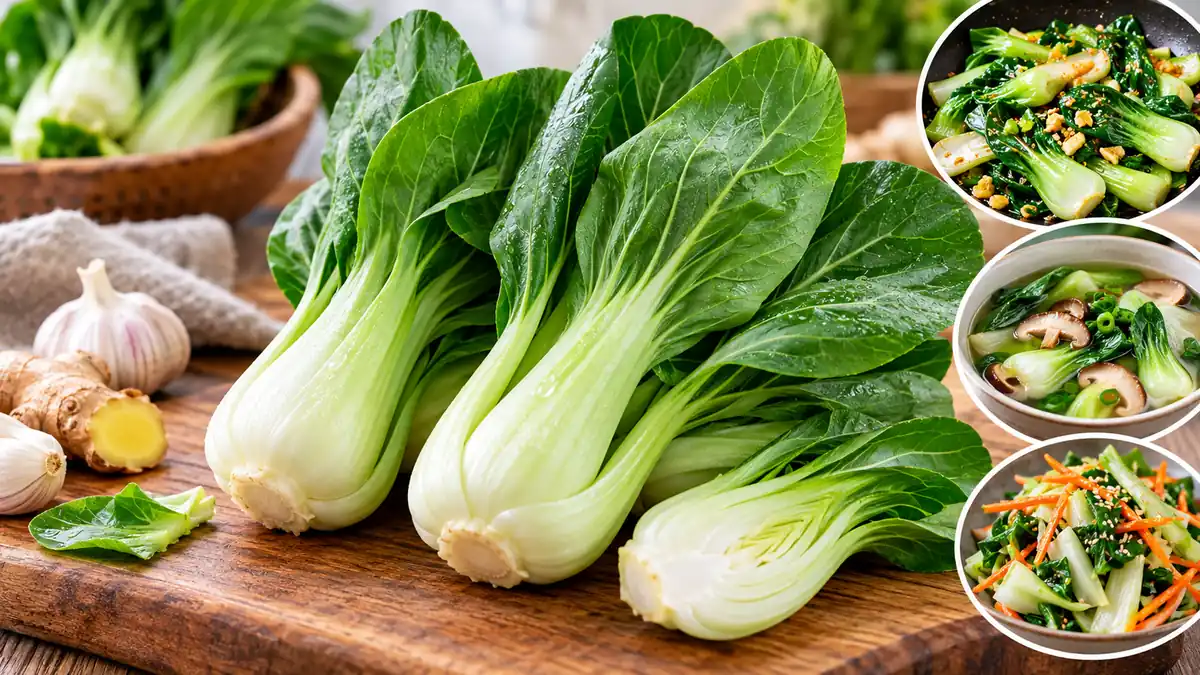
If you’ve spotted a leafy green vegetable with thick white stems at the grocery store, you’ve probably encountered bok choy. This versatile vegetable is a staple in Asian cooking, but its mild flavor, crisp texture, and impressive nutritional profile make it useful in almost any kitchen.
bok choy is a leafy green Chinese cabbage belonging to the cruciferous vegetable family. It has tender green leaves, crunchy stalks, and a mildly sweet, slightly peppery flavor. Rich in vitamins A, C, and K, calcium, and antioxidants, it can be eaten raw, steamed, sautéed, or stir-fried.
Unlike many other leafy greens, bok choy provides two distinct textures in one vegetable. Its stalks remain pleasantly crisp when lightly cooked, while the leaves become soft and silky.
Understanding how to select, clean, prepare, and cook it helps you make the most of this nutritious ingredient.
What Is bok choy?
Bok choy, also known as pak choi, pok choi, or Chinese white cabbage, is a non-heading variety of Chinese cabbage.
Its botanical classification is Brassica rapa subsp. chinensis, and it belongs to the Brassicaceae family.
That makes it closely related to several familiar vegetables, including broccoli, kale, cauliflower, Brussels sprouts, and turnips.
Unlike traditional cabbage, which develops a tightly packed round head, bok choy grows in an open cluster of leaves attached to thick, fleshy stalks.
The plant has two recognizable parts:
- Green leaves: Broad, smooth, and tender, with a mild earthy flavor.
- White or pale green stalks: Thick, juicy, and crunchy, with a subtle sweetness.
Both parts are edible, and neither needs to be discarded during preparation.
Where does bok choy come from?
Bok choy originated in China and has been cultivated there for centuries.
It became an established ingredient in Chinese cuisine before spreading throughout East Asia and eventually reaching Europe, North America, and other regions.
Today, it appears in Chinese, Korean, Japanese, and Southeast Asian-inspired dishes.
Its popularity comes from its quick cooking time, adaptability, and ability to absorb sauces and seasonings without losing its characteristic texture.
What does bok choy taste like?
Raw bok choy tastes fresh, mildly grassy, and slightly peppery.
The white stalks have a watery crunch somewhat similar to celery, although their flavor is gentler.
The green leaves resemble other mild cabbage-family greens and may have a faint mustard-like bitterness.
Cooking softens the leaves and brings out the natural sweetness of the stalks.
Baby varieties are usually more tender, making them especially suitable for quick cooking or serving whole.
bok choy Nutrition Facts
Bok choy is a nutrient-dense vegetable, meaning it provides useful vitamins and minerals without contributing many calories.
It contains substantial water, small amounts of plant protein, dietary fiber, and several micronutrients.
According to Purdue University Extension, one cup of shredded raw bok choy, weighing approximately 70 grams, provides the following approximate nutritional values.

Purdue Extension
+1
| Nutrient | Amount per 1 cup |
|---|---|
| Calories | 9 kcal |
| Carbohydrates | 1.5–2 g |
| Protein | 1 g |
| Dietary fiber | 1 g |
| Total fat | 0 g |
| Sugar | 1 g |
| Calcium | 74 mg |
| Sodium | 46 mg |
Values are rounded and may vary by variety, growing conditions, and serving size.
Bok choy also supplies vitamin C, vitamin K, vitamin A precursors, folate, potassium, and smaller quantities of other minerals.
Vitamin A and beta-carotene
The dark green leaves contain carotenoids, including beta-carotene, which the body can convert into vitamin A.
Vitamin A supports normal vision, immune function, and the maintenance of healthy skin and mucous membranes.
Vitamin C
Vitamin C is an essential water-soluble vitamin that helps the body produce collagen, maintain immune function, and protect cells from oxidative damage.
It also improves the absorption of non-heme iron from plant-based foods.
Because vitamin C is sensitive to heat and water, shorter cooking methods can help retain more of it.
Vitamin K
Vitamin K contributes to normal blood clotting and plays an important role in bone metabolism.
Leafy green vegetables are a major dietary source of this nutrient.
People taking warfarin or similar vitamin K-sensitive anticoagulants should maintain a consistent intake rather than making sudden changes.
Calcium and potassium
Calcium helps maintain bones and teeth and supports muscle and nerve function.
Potassium contributes to normal muscle activity, fluid balance, and blood pressure regulation.
Bok choy offers both minerals, making it a useful addition to a varied diet.
Health Benefits of bok choy
The benefits of bok choy come from its combination of vitamins, minerals, fiber, carotenoids, and naturally occurring plant compounds.
It can contribute to a healthy dietary pattern, although no single vegetable can prevent or treat disease by itself.
1. Supports bone health
Bok choy provides several nutrients involved in maintaining healthy bones.
Calcium is essential for bone structure, while vitamin K participates in processes involved in bone metabolism.
Vitamin C also supports collagen production, which contributes to the structural framework of bones and connective tissues.
Research suggests that calcium from certain low-oxalate leafy greens, including bok choy, can be absorbed relatively efficiently.
However, bok choy should complement rather than replace other calcium sources, such as dairy products, fortified foods, tofu, or other calcium-rich ingredients.
2. Contributes to heart health
Bok choy contains potassium, calcium, fiber, and antioxidant compounds that support cardiovascular health.
Potassium helps regulate fluid balance and contributes to healthy blood pressure.
Dietary fiber can support cholesterol management when consumed as part of a balanced diet.
Cruciferous vegetables also contain phytochemicals that researchers are investigating for their potential cardiovascular benefits.
The strongest practical approach is to eat bok choy as part of a diet rich in vegetables, fruits, legumes, whole grains, and other minimally processed foods.
3. Helps maintain healthy vision
The green leaves contain beta-carotene and other carotenoids.
Beta-carotene can be converted into vitamin A, which is necessary for normal vision, especially under low-light conditions.
Adequate vitamin A intake also helps maintain the surface tissues of the eyes.
Although eating bok choy cannot correct an existing vision problem, it can contribute to the nutrients required for normal eye health.
4. Provides antioxidant compounds
Bok choy contains vitamin C, carotenoids, and other antioxidant substances.
Antioxidants help protect cells from oxidative damage associated with free radicals.
Cruciferous vegetables also contain glucosinolates, naturally occurring sulfur-containing compounds.
When plant tissues are chopped, chewed, or otherwise disrupted, glucosinolates can be converted into biologically active substances, including isothiocyanates.
These compounds are being studied for their effects on cellular defense mechanisms and inflammation.
5. May contribute to a lower risk of certain cancers
Scientists have investigated associations between cruciferous vegetable consumption and cancer risk.
Compounds such as glucosinolates and isothiocyanates have demonstrated biological activity in laboratory and animal studies.
However, evidence from human studies is more complex, and findings vary by cancer type, dietary pattern, and study design.
Eating bok choy may contribute to a healthy diet associated with lower disease risk, but it should not be described as a proven cancer-prevention treatment.
6. Supports digestive health
Bok choy provides dietary fiber and contains a high percentage of water.
Fiber supports normal bowel movements and helps maintain digestive function.
It also contributes to a varied diet that supports beneficial intestinal microorganisms.
People who experience gas or bloating after eating raw cruciferous vegetables may find lightly cooked bok choy easier to tolerate.
For a detailed overview of its nutrients and potential benefits, see the Cleveland Clinic’s bok choy nutrition guide.
Healthline
+1
Types of bok choy and How They Differ
Not all bok choy looks exactly the same.
Different varieties vary in size, stalk color, tenderness, and flavor intensity.
Three commonly encountered forms are baby bok choy, white-stem bok choy, and Shanghai bok choy.
| Type | Appearance | Best uses |
|---|---|---|
| Baby bok choy | Small, compact, tender leaves and stalks | Steaming, sautéing, grilling |
| White-stem bok choy | Large dark green leaves and thick white stalks | Stir-fries, soups, braising |
| Shanghai bok choy | Light green leaves and pale green stalks | Quick stir-fries, soups, steaming |
Baby bok choy
Baby bok choy generally refers to bok choy harvested while still young and small.
It has tender stalks, delicate leaves, and a mild flavor.
Because of its compact size, it is often cooked whole or sliced lengthwise into halves.
Baby bok choy works particularly well with garlic, ginger, sesame oil, and light sauces.
White-stem bok choy
This is the familiar variety with broad dark green leaves and thick white stalks.
Mature plants can grow considerably larger than baby varieties.
Their thicker stalks require slightly longer cooking, making them useful for stir-fries, soups, and braised dishes.
Shanghai bok choy
Shanghai bok choy has pale green stalks and lighter green leaves.
Its appearance is softer and more uniformly green than traditional white-stem varieties.
It is commonly used in Asian cooking and is well suited to gentle steaming or quick sautéing.
The University of Massachusetts Amherst identifies baby, white-stem Canton, and green-stem Shanghai types among common varieties.
How to Clean and Prepare bok choy
Cleaning bok choy properly is essential because dirt and sand can collect between its tightly layered stalks.
A quick rinse over the outside may not remove all the trapped sediment.
Step 1: Trim the base
Place the vegetable on a clean cutting board.
For large bok choy, remove the tough bottom portion of the stem so the individual stalks separate.
For baby bok choy, trim only the dry root end if you want the plant to remain intact.
Step 2: Separate or halve the stalks
Pull apart the individual stalks of mature bok choy.
Alternatively, slice baby bok choy lengthwise into halves or quarters.
This exposes the areas where soil commonly accumulates.
Step 3: Wash thoroughly
Rinse the stalks and leaves under cool running water.
Gently rub the lower stalks with your fingers to dislodge visible dirt.
If the vegetable is particularly sandy, swish the separated pieces in a bowl of clean water, lift them out, and repeat with fresh water.
Step 4: Dry before cooking
Shake off excess water or pat the pieces dry with a clean kitchen towel.
Drying is particularly helpful when stir-frying because excessive surface moisture can cause the vegetables to steam rather than sear.
Step 5: Cut according to the recipe
For stir-fries, slice the stalks crosswise into bite-sized pieces and chop the leaves separately.
For soups, larger pieces work well.
For grilling or pan-searing, halve small plants lengthwise so they retain their shape.
Practical tip: Keep thick stalks separate from delicate leaves until cooking. Adding them at different times helps prevent overcooked greens and undercooked stems.
How to Cook bok choy: 5 Easy Methods
Bok choy cooks quickly and pairs naturally with garlic, ginger, soy sauce, sesame oil, mushrooms, chili, and citrus.
The best cooking method depends on whether you prefer crisp stalks, soft leaves, or lightly browned surfaces.
Cooking times are approximate and depend on the size of the pieces and the heat used.
1. Stir-frying bok choy
Stir-frying is one of the most popular ways to prepare bok choy.
It preserves some crunch while allowing the leaves to absorb flavorful seasonings.
Method:
- Heat a tablespoon of neutral cooking oil in a wok or large skillet.
- Add minced garlic and sliced ginger.
- Stir briefly until fragrant without burning.
- Add the chopped stalks and cook for approximately 2–3 minutes.
- Add the leaves and stir-fry for another 1–2 minutes.
- Finish with a little soy sauce or sesame oil.
The finished vegetable should have tender-crisp stalks and wilted, bright green leaves.
Avoid crowding the pan, which can trap steam and produce a watery result.
2. Steaming bok choy
Steaming is a simple method that requires little added fat.
It also limits direct contact with cooking water, helping preserve some water-soluble nutrients.
Method:
- Place cleaned bok choy in a steamer basket.
- Bring a small amount of water to a simmer beneath the basket.
- Cover and steam until the stalks are tender.
- Check small pieces after approximately 3 minutes; thicker stalks may need around 5 minutes.
- Serve with lemon juice, garlic, or a light sesame dressing.
Steaming is especially suitable for baby bok choy.
3. Sautéing with garlic
Sautéed bok choy makes a quick side dish for rice, noodles, tofu, chicken, or fish.
Heat a little olive oil in a skillet, add sliced garlic, and cook briefly.
Add the stalks first, followed by the leaves.
Cook until the greens wilt and the stalks reach your preferred tenderness.
A splash of water can help soften thicker stalks without requiring much additional oil.
4. Adding bok choy to soups
Bok choy works well in vegetable broth, noodle soup, miso soup, chicken soup, and ramen.
Its stalks add texture, while the leaves become tender in hot liquid.
For best results, add the stalks several minutes before the soup finishes cooking.
Add the leaves near the end so they remain green and do not become overly soft.
It pairs particularly well with mushrooms, tofu, scallions, ginger, and rice noodles.
5. Roasting or grilling
Roasting and grilling create lightly browned edges and a deeper flavor.
For roasting:
- Preheat the oven to approximately 425°F (220°C).
- Slice baby bok choy lengthwise.
- Dry the pieces thoroughly.
- Toss lightly with oil, salt, and pepper.
- Arrange them cut-side down on a baking sheet.
- Roast for approximately 8–12 minutes, checking for tenderness and browning.
For grilling, brush halved baby bok choy with oil and cook over moderate heat, turning as needed.
The leaves can char quickly, so monitor them carefully.
Purdue University Extension provides additional preparation guidance, including approximate steaming and stir-frying times.
Purdue Extension
+1
Easy Garlic bok choy Recipe
One of the simplest ways to enjoy bok choy is to cook it with garlic, ginger, and a light savory sauce.
This recipe works with baby or mature bok choy.
15 minutes
2–3 servings
Easy
Ingredients
- 1 pound (450 g) bok choy
- 1 tablespoon olive oil or neutral cooking oil
- 3 garlic cloves, minced
- 1 teaspoon freshly grated ginger
- 1 tablespoon reduced-sodium soy sauce
- 2 tablespoons water
- 1 teaspoon sesame oil
- Optional: chili flakes, sesame seeds, or lemon juice
Instructions
- Wash the bok choy thoroughly and dry it.
- Separate the leaves from the thick stalks if using mature plants.
- Heat the cooking oil in a large skillet over medium-high heat.
- Add the garlic and ginger, stirring for about 20–30 seconds.
- Add the stalks and cook for approximately 2–3 minutes.
- Add the leaves, soy sauce, and water.
- Toss for another 1–2 minutes until the leaves wilt and the stalks are tender-crisp.
- Remove from the heat and drizzle with sesame oil.
- Serve immediately.
For a complete meal, pair the vegetables with steamed rice, tofu, eggs, chicken, or another protein source.
The recipe can also be adapted with mushrooms, carrots, bell peppers, or a small amount of chili sauce.
Can You Eat bok choy Raw?
Yes. Both the leaves and stalks of bok choy can be eaten raw.
The leaves add freshness to salads, while the stalks provide a crunchy texture.
Raw bok choy is particularly useful in slaws, wraps, and finely chopped vegetable mixtures.
Baby bok choy is often preferred for raw dishes because its leaves and stems are more tender.
Raw vs. cooked bok choy
| Feature | Raw | Cooked |
|---|---|---|
| Texture | Crisp and firm | Tender, sometimes lightly crisp |
| Flavor | Fresh, mildly peppery | Sweeter and milder |
| Vitamin C | Avoids cooking-related losses | Some may be lost during cooking |
| Digestibility | May cause gas in some people | Often easier to tolerate |
| Common uses | Salads, slaws, wraps | Soups, stir-fries, steamed sides |
Cooking changes the vegetable’s texture and some nutrient levels.
Water-soluble vitamins, particularly vitamin C, can be reduced by prolonged boiling.
However, cooking can also make vegetables more palatable and affect the availability of certain carotenoids.
Neither raw nor cooked bok choy is universally healthier. Both can fit into a nutritious diet.
How to Select and Store Fresh bok choy
Choosing fresh bok choy makes a noticeable difference in flavor and texture.
Older plants may develop limp stalks, yellowing leaves, or an unpleasant smell.
How to choose fresh bok choy
Look for vegetables with:
- Firm, crisp stalks.
- Bright green leaves.
- Minimal bruising or discoloration.
- No slimy surfaces.
- No strong, unpleasant odor.
Avoid bunches with extensive yellowing, soft stems, or signs of decay.
Small cosmetic blemishes do not necessarily make the vegetable unsafe, but freshness affects cooking quality.
How long does bok choy last in the refrigerator?
Fresh bok choy generally keeps for approximately 3–5 days in the refrigerator when stored properly.
For best results, keep it unwashed until shortly before preparation.
Wrap the vegetable loosely in a paper towel and place it in a breathable produce bag or suitable container in the refrigerator’s vegetable drawer.
Avoid sealing wet leaves tightly in plastic, because trapped moisture can accelerate deterioration.
Purdue Extension recommends refrigerated storage and indicates that properly stored bok choy may last up to five days.
Purdue Extension
+1
Can you freeze bok choy?
Yes, bok choy can be frozen, although freezing changes its texture.
Frozen stalks usually become softer after thawing, so they are better suited to soups, stews, and cooked dishes than fresh salads.
For better quality:
- Wash and trim the vegetable.
- Cut it into manageable pieces.
- Blanch briefly in boiling water.
- Cool immediately in ice water.
- Drain and dry thoroughly.
- Pack into freezer-safe containers or bags.
- Freeze promptly.
Blanching helps slow the enzyme activity responsible for changes in color, flavor, and texture during frozen storage.
bok choy vs. Spinach, Kale, and Napa Cabbage
Bok choy is sometimes confused with other leafy vegetables, particularly napa cabbage.
Although these vegetables share some culinary uses, they differ in appearance, flavor, and texture.
| Vegetable | Family | Texture | Typical flavor |
|---|---|---|---|
| Bok choy | Brassicaceae | Crunchy stalks, tender leaves | Mild, slightly sweet |
| Spinach | Amaranthaceae | Soft leaves | Mild, earthy |
| Kale | Brassicaceae | Firm, sometimes fibrous leaves | Earthy, sometimes bitter |
| Napa cabbage | Brassicaceae | Soft, layered leaves and crisp ribs | Mild, sweet |
Is bok choy the same as Chinese cabbage?
Bok choy is a type of Chinese cabbage, but the term Chinese cabbage can also refer to napa cabbage.
Napa cabbage forms an elongated, tightly layered head.
Bok choy grows as an open cluster of separate stalks and leaves.
Both are commonly used in Chinese cooking, but they behave differently when prepared.
Is bok choy healthier than spinach?
Both are nutritious vegetables with different strengths.
Spinach supplies folate, iron, magnesium, and several carotenoids.
Bok choy provides vitamin C, vitamin K, calcium, and other nutrients, while generally containing less oxalate than spinach.
Oxalates can bind calcium and reduce its absorption, so bok choy can be a useful source of absorbable plant-based calcium.
Rather than treating one as universally healthier, including both adds nutritional variety.
What can replace bok choy in a recipe?
Suitable substitutes depend on the dish.
Napa cabbage is useful in soups and stir-fries, while Swiss chard offers both leafy greens and substantial stalks.
Baby spinach can replace the leafy portion but cooks much faster and lacks the same crunch.
Kale works in some cooked dishes but generally needs more time to soften.
For a similar combination of crisp stems and tender leaves, Swiss chard is often a practical alternative.
Are There Any Side Effects or Risks of Eating bok choy?
Bok choy is safe for most people when consumed in ordinary food amounts.
However, a few considerations are worth understanding, particularly for people with specific medical conditions or medication requirements.
Vitamin K and blood-thinning medication
Bok choy contains vitamin K, which is involved in blood clotting.
People taking warfarin should keep their vitamin K intake relatively consistent.
They generally do not need to avoid leafy greens completely, but sudden dietary changes may affect anticoagulation management.
Anyone using warfarin should discuss significant changes in vegetable intake with their healthcare professional.
Thyroid health and goitrogens
Like other cruciferous vegetables, bok choy contains glucosinolates and compounds that can influence iodine metabolism under certain circumstances.
These substances are sometimes described as goitrogenic.
Eating ordinary portions of bok choy is not generally considered a thyroid problem for people with adequate iodine intake.
Very large amounts of raw cruciferous vegetables may be more concerning, particularly in people with iodine deficiency or existing thyroid conditions.
Cooking can reduce some goitrogenic activity.
People with thyroid disease should follow individualized medical advice rather than eliminating nutritious vegetables without a clear reason.
Digestive discomfort
Some individuals experience gas, bloating, or abdominal discomfort after eating cruciferous vegetables.
This may be related to fermentable carbohydrates and individual digestive sensitivity.
Starting with smaller portions and cooking the vegetable until tender may improve tolerance.
Food safety considerations
Raw vegetables can carry microorganisms from soil, water, handling, or storage.
Wash bok choy thoroughly under running water before eating or cooking.
Keep it separate from raw meat and poultry, and use clean utensils and cutting boards.
Discard portions that have become slimy, moldy, or visibly spoiled.
How to Grow bok choy at Home
Bok choy is a relatively fast-growing cool-season vegetable that can be cultivated in garden beds or containers.
It generally performs best during spring or autumn when temperatures are moderate.
Excessive heat, prolonged stress, or increasing day length can encourage bolting, when the plant produces a flowering stalk instead of continuing leafy growth.
Ideal growing conditions
Bok choy grows best with:
- Fertile, well-drained soil.
- Consistent moisture.
- Full sun during cool weather.
- Some afternoon shade in warmer conditions.
- Adequate spacing for leaf development.
A soil pH of approximately 6.0–7.5 is generally suitable.
Planting and harvesting
Seeds can be sown directly into prepared soil or started in suitable containers.
Follow the seed packet’s spacing and planting-depth recommendations, because varieties differ considerably in mature size.
Baby bok choy can often be harvested in roughly 30–40 days under favorable conditions.
Larger varieties may require approximately 45–60 days or longer.
These are general estimates; temperature, variety, growing conditions, and desired harvest size all influence maturity.
Harvest the whole plant near soil level or remove outer leaves as needed.
Common growing problems
Flea beetles, aphids, cabbage worms, and slugs may damage the leaves.
Row covers, regular inspection, and appropriate garden hygiene can help manage these pests.
Bolting is another common challenge.
Choosing a suitable planting season and maintaining even soil moisture can reduce the risk of premature flowering.
How to Include More bok choy in Everyday Meals
Bok choy is not limited to traditional stir-fries.
Its mild flavor makes it easy to combine with ingredients from different cuisines.
For breakfast, finely chopped leaves can be added to scrambled eggs, omelets, or savory breakfast bowls.
At lunch, raw baby bok choy can be mixed with carrots, cabbage, and a sesame dressing to create a crunchy salad.
For dinner, lightly sautéed bok choy can accompany grilled fish, roasted chicken, tofu, noodles, or rice.
It also works in:
- Vegetable fried rice.
- Ramen and noodle soups.
- Dumpling fillings.
- Rice bowls with mushrooms.
- Garlic and ginger vegetable sides.
- Vegetable curries.
- Broth-based soups.
One useful technique is to treat the stalks and leaves almost like two separate ingredients.
The stalks provide structure and crunch, while the leaves supply a tender green component.
Cooking them in stages makes it easier to achieve a balanced texture.
Final Thoughts on bok choy
Bok choy is a versatile, nutrient-rich vegetable that deserves a place in a varied diet.
Its crisp stalks, tender leaves, and mild flavor make it suitable for everything from fresh salads to quick stir-fries and warming soups.
It provides vitamins A, C, and K, along with calcium, potassium, fiber, and antioxidant compounds that support normal body functions.
For the best results, choose firm, fresh stalks, wash carefully between the layers, and avoid overcooking the leaves.
A simple garlic and ginger stir-fry is an excellent starting point for enjoying bok choy, while steaming, roasting, and adding it to soups provide easy ways to incorporate this nutritious Chinese cabbage into everyday meals.
