

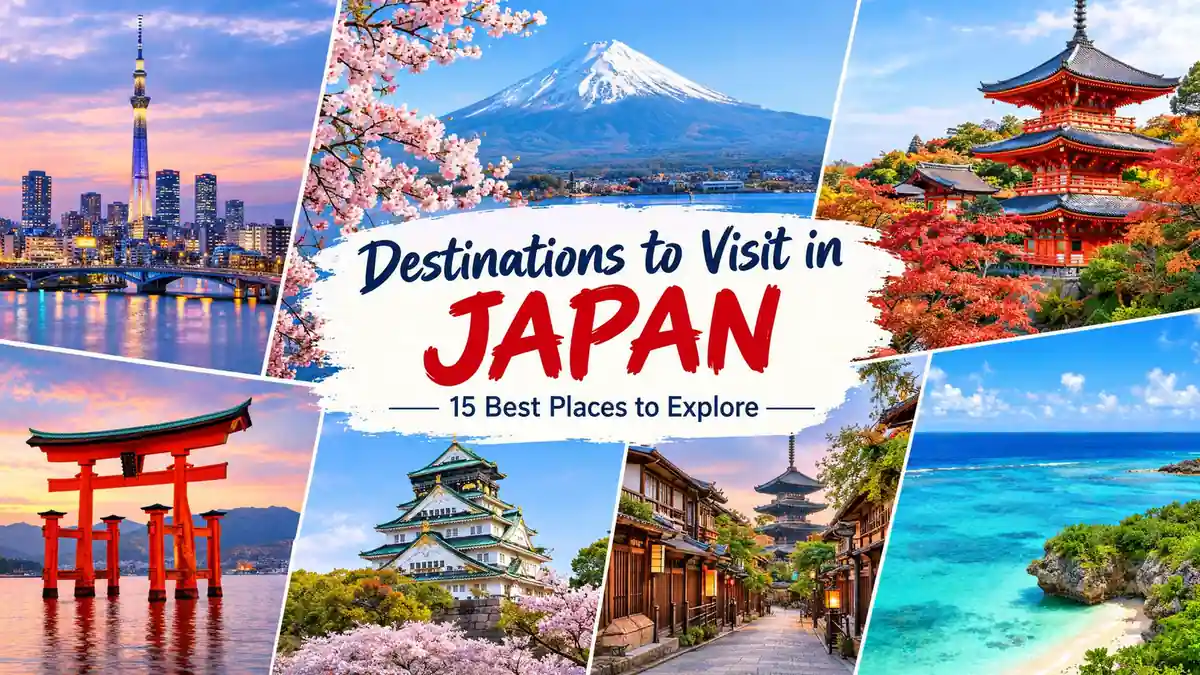
Japan is a country where centuries-old temples stand beside futuristic skyscrapers, snow-covered mountains overlook traditional villages, and tropical beaches offer a completely different side of island life. Choosing where to go can be challenging, especially when every region offers something distinctive.
The best destinations to visit in japan include Tokyo, Kyoto, Osaka, Mount Fuji, Nara, Hiroshima, Hokkaido, Okinawa, Kanazawa, Takayama, and several lesser-known regions. Each offers a different combination of cultural attractions, natural scenery, food, history, and seasonal experiences, making Japan rewarding for both first-time visitors and returning travelers.
This guide explores 15 memorable destinations, explains what makes each worth visiting, and helps you decide when to go, how long to stay, and which places fit your travel interests.
H2: Best destinations to visit in japan for First-Time Travelers
For a first trip, Tokyo, Kyoto, and Osaka form an excellent starting point. They offer convenient transportation, major landmarks, diverse accommodations, and a balanced introduction to modern and traditional Japanese culture.
H3: 1. Tokyo – Modern Japan Meets Traditional Culture
Tokyo, Japan’s capital, is one of the world’s most fascinating metropolitan areas. Its neighborhoods have dramatically different personalities, allowing travelers to experience several sides of the country within one city.
Top attractions in Tokyo
- Shibuya Crossing: Experience the famous pedestrian intersection and explore surrounding shopping streets.
- Senso-ji Temple: Visit one of Tokyo’s oldest Buddhist temples in historic Asakusa.
- Tokyo Skytree: Enjoy panoramic city views from one of Japan’s tallest structures.
- Meiji Jingu: Explore a peaceful Shinto shrine surrounded by forest near Harajuku.
- Shinjuku: Discover entertainment districts, restaurants, department stores, and observation points.
- Akihabara: Explore electronics shops, gaming culture, and anime-related attractions.
Tokyo also provides exceptional food experiences, from sushi counters and ramen shops to izakaya and traditional Japanese sweets.
For a quieter experience, visit the gardens around the Imperial Palace or explore Yanaka, where traditional streets and small shops preserve an older atmosphere.
Best time to visit: March–May and October–November.
Recommended stay: 3–5 days.
Best for: First-time travelers, food lovers, shopping, architecture, and urban exploration.
H3: 2. Kyoto – Japan’s Cultural and Historical Heart
Kyoto served as Japan’s capital for more than a thousand years and remains one of the country’s most important cultural destinations.
Its historic temples, shrines, traditional neighborhoods, and seasonal gardens make it particularly appealing to travelers interested in Japanese heritage.
Top attractions in Kyoto
- Fushimi Inari Taisha: Walk beneath thousands of vermilion torii gates.
- Kinkaku-ji: Admire the famous Golden Pavilion reflected in its surrounding pond.
- Kiyomizu-dera: Explore a historic hillside temple with views across Kyoto.
- Arashiyama Bamboo Grove: Walk through towering bamboo near the city’s western mountains.
- Gion: Discover traditional architecture and streets associated with Kyoto’s geiko and maiko culture.
- Nishiki Market: Sample regional ingredients, snacks, and local specialties.
Kyoto is especially beautiful during cherry blossom season and autumn foliage. However, these periods attract large crowds.
Visit popular temples early in the morning, explore less-central neighborhoods, and respect photography restrictions in residential areas.
Best time to visit: March–April and November.
Recommended stay: 3–4 days.
Best for: Temples, gardens, traditional architecture, history, and cultural experiences.
H3: 3. Osaka – Street Food, Entertainment, and Nightlife
Osaka is known for its energetic atmosphere, approachable food culture, and lively entertainment districts.
Compared with Kyoto’s historic character, Osaka feels more informal and contemporary.
Top attractions in Osaka
- Dotonbori: Explore neon-lit streets, restaurants, and the famous canal.
- Osaka Castle: Learn about the city’s feudal history and enjoy the surrounding park.
- Universal Studios Japan: Visit a major theme park with immersive entertainment areas.
- Shinsekai: Experience nostalgic streets and casual restaurants.
- Umeda Sky Building: Enjoy elevated views of Osaka’s urban landscape.
- Kuromon Market: Discover seafood, fresh produce, and prepared foods.
Osaka is especially famous for takoyaki, okonomiyaki, and kushikatsu.
Its transportation connections also make it a practical base for day trips to Kyoto, Nara, Kobe, and Himeji.
Best time to visit: March–May and October–November.
Recommended stay: 2–3 days.
Best for: Food, nightlife, family attractions, and urban entertainment.
H2: Best Natural destinations to visit in japan
Japan’s natural landscapes extend far beyond its famous cities. Mountains, volcanic regions, forests, lakes, and national parks provide opportunities for hiking, photography, wildlife viewing, and relaxation.
H3: 4. Mount Fuji and the Fuji Five Lakes
Mount Fuji is Japan’s highest mountain, rising approximately 3,776 meters above sea level. Its symmetrical volcanic cone is one of the country’s most recognizable landmarks.
The Fuji Five Lakes region, known as Fujigoko, offers some of the most accessible views of the mountain.
Top attractions around Mount Fuji
- Lake Kawaguchiko: Enjoy lakeside scenery, museums, and mountain views.
- Chureito Pagoda: Photograph the iconic pagoda with Mount Fuji in the background when visibility permits.
- Oshino Hakkai: Explore a village area known for its clear spring-fed ponds.
- Lake Yamanakako: Experience outdoor activities and expansive landscapes.
- Fuji-Q Highland: Visit a theme park known for its roller coasters.
Mount Fuji is also a major climbing destination, but summit hiking requires careful preparation. Official climbing seasons, trail rules, fees, and reservation systems can change.
Travelers should consult the official Mount Fuji climbing information before planning an ascent.
Best time for mountain views: Generally colder, clearer months, especially November–February.
Recommended stay: 1–2 days.
Best for: Photography, mountain scenery, lakes, and outdoor activities.
H3: 5. Hakone – Hot Springs and Volcanic Landscapes
Hakone is a mountainous resort area southwest of Tokyo, famous for hot springs, volcanic scenery, art museums, and views of Mount Fuji.
It is an excellent destination for travelers wanting a relaxing break from busy cities.
Top attractions in Hakone
- Lake Ashi: Enjoy boat trips with mountain scenery.
- Owakudani: Explore an active volcanic valley with sulfur vents.
- Hakone Open-Air Museum: Discover sculptures displayed against a mountain backdrop.
- Hakone Shrine: Visit the shrine and its striking lakeside torii gate.
- Hakone Ropeway: Experience aerial views of volcanic terrain.
Staying in a traditional ryokan with an onsen can be a highlight. Many accommodations offer Japanese-style rooms, seasonal meals, and access to thermal baths.
Visitors should check volcanic activity advisories and transport operating conditions before traveling.
Best time to visit: April–May and October–November.
Recommended stay: 1–2 days.
Best for: Hot springs, relaxation, art, and mountain scenery.
H3: 6. Hokkaido – Snow, National Parks, and Wide-Open Landscapes
Hokkaido is Japan’s northernmost main island, known for its colder climate, extensive wilderness, winter sports, and spectacular summer landscapes.
Unlike the densely populated urban areas of central Japan, much of Hokkaido offers spacious countryside and dramatic natural scenery.
Top attractions in Hokkaido
- Sapporo: Explore the island’s largest city, food culture, and winter festivities.
- Niseko: Enjoy skiing and snowboarding in a renowned powder-snow destination.
- Furano: See colorful flower fields during summer.
- Biei: Discover rolling hills, scenic roads, and the Blue Pond.
- Shiretoko National Park: Explore a UNESCO-listed natural region known for wildlife and ecosystems.
- Daisetsuzan National Park: Experience mountain hiking and early autumn foliage.
Hokkaido’s food is another attraction, particularly seafood, dairy products, ramen, and regional produce.
The Sapporo Snow Festival, typically held in February, features elaborate snow and ice sculptures.
Best time to visit: December–February for winter activities; June–August for flowers and hiking.
Recommended stay: 4–7 days.
Best for: Snow sports, nature, road trips, and outdoor adventures.
H2: Historical and Cultural Places to Visit in Japan
Beyond Kyoto, numerous Japanese destinations preserve remarkable architecture, religious traditions, and important historical sites.
H3: 7. Nara – Ancient Temples and Friendly Deer
Nara was Japan’s first permanent capital during the eighth century and remains an important center of Buddhist heritage.
It is especially famous for Nara Park, where free-roaming deer have become a symbol of the city.
Top attractions in Nara
- Todai-ji Temple: See the Great Buddha housed within an enormous historic wooden structure.
- Nara Park: Walk through open green spaces populated by deer.
- Kasuga Taisha: Visit a Shinto shrine known for its stone and bronze lanterns.
- Kofuku-ji: Discover significant Buddhist architecture and historical artifacts.
- Isuien Garden: Enjoy traditional Japanese landscape design.
Nara is easily accessible from both Kyoto and Osaka, making it a popular day-trip destination.
Although the deer may appear tame, they are wild animals. Feed them only approved deer crackers and avoid teasing or crowding them.
Best time to visit: March–May and October–November.
Recommended stay: 1 day, or overnight for a quieter experience.
Best for: Ancient history, temples, parks, and cultural sightseeing.
H3: 8. Hiroshima and Miyajima – History and Island Beauty
Hiroshima offers an important opportunity to understand Japan’s modern history while also exploring beautiful gardens, regional food, and nearby island landscapes.
Top attractions in Hiroshima
- Hiroshima Peace Memorial Park: Reflect on the atomic bombing of August 6, 1945.
- Peace Memorial Museum: Learn about the bombing and its humanitarian consequences.
- Atomic Bomb Dome: Visit a UNESCO World Heritage Site preserved as a reminder of the destruction.
- Shukkeien Garden: Explore a traditional Japanese landscape garden.
- Hiroshima Castle: Discover the city’s earlier history.
Nearby Miyajima Island is famous for Itsukushima Shrine and its iconic offshore torii gate, which appears to float during high tide.
Visitors can also hike or take a ropeway toward Mount Misen for scenic views across the Seto Inland Sea.
Hiroshima-style okonomiyaki, prepared in layers with noodles, is a notable regional specialty.
Best time to visit: March–May and October–November.
Recommended stay: 2 days.
Best for: History, reflection, island scenery, and regional cuisine.
H3: 9. Kanazawa – Traditional Gardens and Samurai Heritage
Kanazawa offers many of Kyoto’s cultural attractions in a more compact setting.
The city is known for preserved historic districts, traditional crafts, museums, and one of Japan’s celebrated landscape gardens.
Top attractions in Kanazawa
- Kenrokuen Garden: Explore a garden designed to showcase seasonal beauty.
- Kanazawa Castle Park: Discover the grounds of a former feudal castle.
- Higashi Chaya District: Walk among traditional wooden teahouses.
- Nagamachi Samurai District: See preserved streets and former samurai residences.
- Omicho Market: Discover fresh seafood and regional foods.
- 21st Century Museum of Contemporary Art: Explore modern artistic exhibitions.
Kanazawa is also associated with gold-leaf craftsmanship, Kutani ceramics, and traditional lacquerware.
Its location makes it a useful stop between Tokyo, the Hokuriku region, and central Japan.
Best time to visit: April–May and October–November.
Recommended stay: 1–2 days.
Best for: Gardens, traditional crafts, architecture, and history.
H3: 10. Takayama and Shirakawa-go – Traditional Mountain Villages
Takayama, located in the Japanese Alps of Gifu Prefecture, is known for its preserved Edo-period streets and mountain-town atmosphere.
The nearby village of Shirakawa-go is famous for its traditional gassho-zukuri farmhouses, whose steep thatched roofs were designed to withstand heavy snowfall.
Top attractions
- Sanmachi Suji: Explore Takayama’s historic merchant district.
- Takayama Jinya: Visit a preserved government building from the Edo period.
- Miyagawa Morning Market: Discover local produce and handmade goods.
- Hida Folk Village: Learn about traditional regional architecture.
- Shirakawa-go: Admire the distinctive farmhouses of this UNESCO World Heritage village.
Takayama is also known for Hida beef and the Takayama Festival, which features ornate traditional floats during spring and autumn.
Winter brings picturesque snow-covered scenery, although transportation can be affected by weather.
Best time to visit: April–May, October–November, and winter for snowy landscapes.
Recommended stay: 2–3 days including Shirakawa-go.
Best for: Traditional villages, mountain scenery, photography, and local culture.
H2: Best Island and Coastal destinations to visit in japan
Japan is an archipelago with thousands of islands, offering beaches, coastal villages, coral reefs, subtropical forests, and unique regional cultures.
H3: 11. Okinawa – Tropical Beaches and Ryukyu Culture
Okinawa Prefecture lies southwest of mainland Japan and has a subtropical climate.
Its culture, cuisine, and historical background differ from those of the main islands, reflecting the heritage of the former Ryukyu Kingdom.
Top attractions in Okinawa
- Okinawa Churaumi Aquarium: Explore marine exhibits featuring large ocean species.
- Shurijo Castle Park: Learn about Ryukyu history and ongoing heritage restoration.
- Kerama Islands: Experience clear water, snorkeling, and marine wildlife.
- Ishigaki Island: Discover beaches, coral reefs, and island landscapes.
- Miyakojima: Enjoy white-sand beaches and turquoise coastal waters.
- Cape Manzamo: Admire dramatic limestone cliffs overlooking the sea.
Okinawa’s cuisine includes goya champuru, Okinawa soba, and regional sweet potatoes.
The islands are particularly appealing for swimming, diving, snorkeling, and slower-paced holidays.
Best time to visit: April–June and October, depending on rainfall and storm conditions.
Recommended stay: 4–6 days.
Best for: Beaches, marine activities, island culture, and relaxation.
H3: 12. Naoshima – Japan’s Art Island
Naoshima is a small island in the Seto Inland Sea celebrated for contemporary art, architecture, and its peaceful coastal setting.
The island’s museums and outdoor installations have made it one of Japan’s most distinctive cultural destinations.
Top attractions in Naoshima
- Chichu Art Museum: Experience artworks integrated into architecture and natural light.
- Benesse House Museum: Explore a combination of contemporary art, architecture, and coastal scenery.
- Art House Project: Discover installations inside renovated village buildings.
- Yayoi Kusama’s Pumpkin artworks: See internationally recognized installations associated with the island.
Naoshima is closely associated with architect Tadao Ando, whose designs are central to the island’s artistic identity.
Ferries connect the island with ports in Okayama and Kagawa Prefectures.
Museum entry may require advance reservations, and some attractions close on particular weekdays.
Best time to visit: March–May and September–November.
Recommended stay: 1–2 days.
Best for: Contemporary art, architecture, photography, and peaceful coastal experiences.
H2: Unique and Lesser-Known Places in Japan
Travelers willing to venture beyond the most famous cities can discover sacred mountain routes, dramatic gorges, and historic pilgrimage destinations.
H3: 13. Nikko – Ornate Shrines and Mountain Landscapes
Nikko, north of Tokyo in Tochigi Prefecture, combines elaborate religious architecture with forests, waterfalls, and mountain scenery.
Its shrines and temples are recognized as a UNESCO World Heritage Site.
Top attractions in Nikko
- Nikko Toshogu: Explore the ornate shrine associated with Tokugawa Ieyasu.
- Rinno-ji Temple: Discover important Buddhist heritage.
- Futarasan Shrine: Visit a historic Shinto religious site.
- Kegon Falls: See one of Japan’s best-known waterfalls.
- Lake Chuzenji: Enjoy mountain views and seasonal scenery.
Nikko is especially impressive during autumn, when surrounding forests display vibrant foliage.
Best time to visit: May–June and October–November.
Recommended stay: 1–2 days.
Best for: Shrines, forests, waterfalls, and history.
H3: 14. Kamakura – Coastal Temples and the Great Buddha
Kamakura is a historic coastal city south of Tokyo, once the political center of Japan’s first shogunate.
Today, it is known for Buddhist temples, Shinto shrines, traditional streets, and nearby beaches.
Top attractions in Kamakura
- Kotoku-in: See the famous Great Buddha, a monumental bronze statue.
- Hasedera Temple: Explore gardens, religious sculptures, and coastal viewpoints.
- Tsurugaoka Hachimangu: Visit one of the city’s most important shrines.
- Komachi-dori: Discover small shops, cafes, and local snacks.
- Enoshima: Explore a nearby island known for shrines, caves, and ocean views.
Kamakura works well as a day trip from Tokyo, although an overnight stay allows more time for coastal walks and less crowded temple visits.
Best time to visit: March–June and October–November.
Recommended stay: 1–2 days.
Best for: Historic temples, coastal scenery, and short excursions from Tokyo.
H3: 15. Koyasan – Sacred Mountain Temples and Spiritual Heritage
Koyasan, also called Mount Koya, is a mountain settlement in Wakayama Prefecture and an important center of Shingon Buddhism.
Founded as a religious center by Kobo Daishi, also known as Kukai, it offers a different experience from Japan’s large cities.
Top attractions in Koyasan
- Okunoin Cemetery: Walk through a forested cemetery containing thousands of memorials.
- Kongobu-ji Temple: Explore an important temple of Shingon Buddhism.
- Danjo Garan: Visit a sacred temple complex with striking religious architecture.
- Temple lodging: Experience a stay at a Buddhist temple, often including vegetarian shojin ryori cuisine.
Some temple lodgings allow visitors to observe morning prayers or participate in selected cultural activities.
Visitors should respect religious customs and remember that Koyasan is an active spiritual community, not simply a sightseeing attraction.
Best time to visit: April–May and October–November.
Recommended stay: 1–2 days.
Best for: Spiritual heritage, temples, mountain forests, and cultural immersion.
H2: Best Time to Visit Japan by Season
Japan’s climate varies considerably between northern Hokkaido, central Honshu, and subtropical Okinawa.
Choosing the right season can significantly influence your travel experience.
| Season | Months | Main attractions | Recommended destinations |
|---|---|---|---|
| Spring | March–May | Cherry blossoms, gardens, mild temperatures | Tokyo, Kyoto, Nara, Osaka |
| Summer | June–August | Festivals, mountain hiking, flower fields | Hokkaido, Japanese Alps, Okinawa |
| Autumn | September–November | Fall foliage, comfortable sightseeing | Kyoto, Nikko, Kanazawa, Takayama |
| Winter | December–February | Skiing, snow festivals, hot springs | Hokkaido, Hakone, Nagano, Shirakawa-go |
H3: When Is Cherry Blossom Season in Japan?
Cherry blossoms, known as sakura, generally begin appearing in warmer southern regions before progressing northward.
In many years, Tokyo and Kyoto experience peak blossoms around late March or early April, while Hokkaido often reaches its peak later.
However, blooming dates vary according to weather and location.
Travelers should consult updated forecasts from the Japan Meteorological Corporation or other reliable seasonal sources rather than assuming exact dates.
H3: Is Japan Worth Visiting in Winter?
Yes. Winter offers some of Japan’s most memorable seasonal experiences.
Hokkaido and Nagano attract skiers and snowboarders, while mountain resorts provide snowy scenery and hot springs.
Tokyo, Kyoto, and Osaka are often less crowded than during peak cherry blossom season, although New Year holidays can be busy and some attractions operate reduced schedules.
Winter also offers clearer opportunities to see Mount Fuji from certain viewpoints.
H3: When Should Travelers Avoid Typhoon Season?
Typhoons can affect Japan, particularly between summer and early autumn. Risk varies by region and individual storm systems.
Southern and coastal destinations, including Okinawa, may experience flight disruptions, ferry cancellations, and heavy rainfall.
Rather than avoiding the entire season, travelers should monitor forecasts, maintain flexible plans, and understand their transportation and accommodation cancellation policies.
H2: How to Choose the Best destinations to visit in japan
The right itinerary depends on your interests, available time, travel budget, and preferred pace.
H3: Best Places in Japan for Different Travel Interests
| Travel interest | Recommended destinations | Main reason |
|---|---|---|
| First-time sightseeing | Tokyo, Kyoto, Osaka | Major landmarks and convenient transport |
| Japanese history | Kyoto, Nara, Hiroshima, Nikko | Temples, shrines, and historical sites |
| Nature and mountains | Mount Fuji, Hakone, Hokkaido | Lakes, forests, volcanoes, and trails |
| Food experiences | Osaka, Tokyo, Hiroshima, Kanazawa | Distinctive regional cuisines |
| Beaches and islands | Okinawa, Miyakojima, Ishigaki | Warm climate and coastal activities |
| Traditional villages | Takayama, Shirakawa-go | Historic architecture and mountain culture |
| Art and architecture | Naoshima, Kanazawa, Tokyo | Museums and contemporary design |
| Spiritual experiences | Koyasan, Kyoto, Nikko | Sacred sites and Buddhist traditions |
H3: How Many Days Do You Need in Japan?
A week is enough to experience several major highlights, but longer trips allow a more balanced itinerary.
7-day Japan itinerary
- Days 1–3: Tokyo and nearby attractions.
- Days 4–5: Kyoto’s temples and historic neighborhoods.
- Days 6–7: Osaka, including a possible excursion to Nara.
10-day Japan itinerary
- Days 1–3: Tokyo.
- Day 4: Hakone or the Fuji Five Lakes.
- Days 5–7: Kyoto.
- Day 8: Nara.
- Days 9–10: Osaka.
14-day Japan itinerary
- Days 1–4: Tokyo, including a possible Kamakura or Nikko excursion.
- Days 5–6: Mount Fuji region or Hakone.
- Days 7–9: Kyoto.
- Day 10: Nara.
- Days 11–12: Osaka.
- Days 13–14: Hiroshima and Miyajima.
These itineraries are starting points, not rigid schedules. Longer-distance destinations such as Hokkaido and Okinawa generally deserve separate travel segments rather than rushed day trips.
H3: Which Japanese Cities Are Best for Families?
Tokyo and Osaka are particularly convenient for families because of their public transportation, parks, museums, and major theme parks.
Kyoto and Nara can also be enjoyable for children interested in gardens, temples, traditional streets, and outdoor exploration.
For nature-focused family holidays, Hokkaido offers seasonal activities, while Okinawa provides beaches and marine attractions.
Families traveling with young children should avoid changing hotels too frequently and allow extra time between activities.
H2: Essential Travel Tips for Exploring Japan
Good planning makes visiting multiple Japanese destinations easier and more enjoyable.
H3: Understanding Japan’s Transportation System
Japan has an extensive railway network that connects major cities and regional destinations.
The Shinkansen bullet train is particularly useful for traveling between Tokyo, Kyoto, Osaka, and Hiroshima.
Local railways, buses, ferries, and domestic flights provide access to more remote areas.
Important transportation tips:
- Use route-planning services to compare travel times and connections.
- Consider an IC card such as Suica, PASMO, or ICOCA for compatible local transport.
- Check whether the Japan Rail Pass offers savings for your specific itinerary rather than assuming it is the cheapest option.
- Reserve seats where necessary, especially during busy holiday periods.
- Confirm ferry schedules and local bus frequency when visiting islands or rural areas.
The national Japan Rail Pass does not cover every train or transportation service, and certain premium Shinkansen services have additional requirements.
H3: How Much Does a Trip to Japan Cost?
Travel costs vary by season, destination, accommodation type, and personal preferences.
The following are broad illustrative daily planning ranges per person, excluding international flights:
| Travel style | Approximate daily budget |
|---|---|
| Budget | ¥8,000–¥15,000 |
| Mid-range | ¥15,000–¥30,000 |
| Higher-end | ¥30,000+ |
These figures are not fixed prices. Major-city hotels, intercity transportation, and popular seasonal accommodations can substantially increase expenses.
Budget-conscious travelers can reduce costs by using business hotels, eating at casual restaurants, purchasing regional rail tickets when suitable, and limiting unnecessary long-distance transfers.
H3: Japanese Etiquette Visitors Should Know
Understanding a few local customs helps travelers interact respectfully with residents and cultural sites.
- Speak quietly on public transportation.
- Follow posted rules at temples and shrines.
- Remove shoes where required.
- Avoid eating while walking in places where it is discouraged.
- Carry a small bag for rubbish when bins are unavailable.
- Respect photography restrictions, particularly in residential streets and religious areas.
- Follow onsen bathing rules, including washing before entering communal baths.
Tipping is generally not customary in Japan, although service practices can vary.
H3: Do You Need to Speak Japanese?
Fluent Japanese is not essential for visiting major tourist destinations.
Many transportation systems offer English-language signs, and tourist information centers frequently provide multilingual assistance.
However, learning a few phrases improves everyday interactions.
| Japanese phrase | English meaning |
|---|---|
| Konnichiwa | Hello |
| Arigatou gozaimasu | Thank you |
| Sumimasen | Excuse me / Sorry |
| Onegaishimasu | Please |
| Eigo ga hanasemasu ka? | Can you speak English? |
Translation apps and offline maps are especially helpful in rural areas where English signage may be limited.
H3: Common Mistakes to Avoid When Planning a Japan Trip
One common mistake is trying to visit too many distant regions in a short period.
Although Japan’s railway system is efficient, travel between destinations still requires time for station transfers, luggage, and hotel check-ins.
Other mistakes include underestimating seasonal crowds, booking popular attractions too late, ignoring regional weather differences, and assuming every destination is easily accessible by train.
A better approach is to group nearby destinations together and reserve sufficient time for spontaneous discoveries.
H2: Final Thoughts on the Best destinations to visit in japan
Japan offers remarkable variety, from Tokyo’s modern skyline and Kyoto’s historic temples to Hokkaido’s snowy mountains and Okinawa’s tropical coastlines.
For first-time visitors, Tokyo, Kyoto, and Osaka provide a practical introduction to the country’s culture, cuisine, and major attractions. Travelers seeking nature should consider Mount Fuji, Hakone, or Hokkaido, while those interested in history and traditional architecture will appreciate Nara, Kanazawa, Takayama, and Nikko.
The best destinations to visit in japan ultimately depend on the experiences you value most. Choose a manageable number of regions, consider seasonal conditions, and leave enough time to appreciate each place beyond its most famous landmarks.
A thoughtfully paced journey will reveal not only Japan’s celebrated attractions but also the smaller neighborhoods, local traditions, and everyday experiences that make traveling through the country memorable.
