

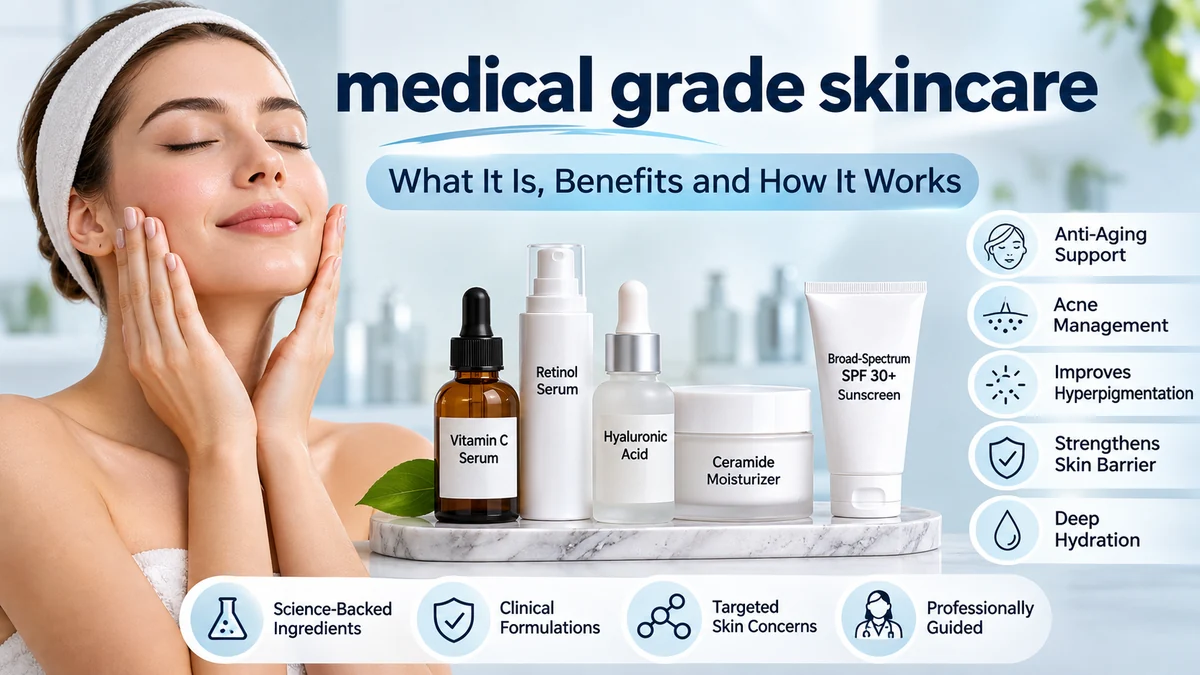
Expensive skincare products with scientific ingredients and professional endorsements often promise impressive results. But does a medical-grade label actually mean a product is more effective than an ordinary moisturizer or serum?
Understanding medical grade skincare can help you distinguish evidence-based formulations from marketing claims, avoid unnecessary expenses, and develop a routine that addresses your specific skin concerns.
Medical grade skincare refers to products marketed as professionally developed, clinically tested, or formulated with targeted active ingredients to improve specific skin concerns. Although some formulations offer proven benefits, the term is not an officially recognized FDA classification. Effectiveness depends on ingredient concentration, formulation, clinical evidence, and individual skin tolerance.
What Is medical grade skincare?
Medical-grade skincare, sometimes called professional skincare or cosmeceutical skincare, describes products commonly associated with dermatology clinics, medical spas, aesthetic practitioners, and cosmetic specialists.
These products are typically designed to address concerns such as:
- Fine lines and wrinkles
- Acne and congested pores
- Hyperpigmentation and dark spots
- Uneven skin tone
- Sun damage
- Rough skin texture
- Dehydration
- Visible signs of premature aging
Depending on the formulation, these products may contain retinoids, antioxidants, exfoliating acids, peptides, and moisturizing ingredients.
Is medical-grade skincare FDA-approved?
The United States Food and Drug Administration (FDA) does not recognize medical-grade skincare as a separate regulatory category.
Most cosmetic products do not require FDA approval before being marketed. Products intended to treat diseases or alter the body’s structure or function may instead be regulated as drugs.
Some products, including certain acne treatments and sunscreens, fall under drug regulations. FDA+2
A medical-grade label does not automatically indicate:
- FDA approval
- Pharmaceutical-grade purity
- Prescription-strength ingredients
- Independent clinical testing
- Superior effectiveness
- Guaranteed safety
Consumers should evaluate the individual formulation and its supporting evidence rather than relying on terminology alone.
medical grade skincare vs. Regular Skincare
Professional skincare and conventional over-the-counter skincare frequently contain similar active ingredients. The meaningful differences may involve ingredient stability, concentration, delivery systems, clinical research, and professional guidance.
| Feature | Medical-grade skincare | Regular skincare |
|---|---|---|
| Availability | Clinics, medical spas and retailers | Pharmacies, supermarkets and retailers |
| Active ingredients | Often targeted formulations | Basic or targeted formulations |
| Concentration | Varies by product | Varies by product |
| Clinical testing | Brand and product dependent | Brand and product dependent |
| FDA classification | No separate classification | Cosmetic or drug |
| Professional guidance | Sometimes available | Usually optional |
| Price | Often higher | Affordable to premium |
| Irritation risk | Depends on formulation | Depends on formulation |
| Prescription required | Usually not | Usually not |
Is medical-grade skincare stronger?
Not necessarily. Some professional products contain higher concentrations of active ingredients, but conventional skincare can contain equally effective concentrations.
For example, a pharmacy serum containing an appropriately formulated vitamin C solution may provide similar benefits to an expensive professional serum.
Higher concentrations can also increase irritation without producing proportionally better results.
Medical-grade vs. prescription skincare
Prescription skincare differs because it includes medications prescribed by qualified healthcare professionals.
Tretinoin, for example, is a prescription retinoid used for specific dermatological indications. Cosmetic retinol products are available without a prescription and differ in potency and how they are processed by the skin.
A professional cosmetic serum should not be confused with a prescription medication simply because both are available through a dermatology clinic.
How Does Medical-Grade Skincare Work?
Professional skincare formulations use active ingredients to target particular skin concerns. Their effectiveness depends on several factors beyond the ingredient list.
Active ingredient concentration
Concentration influences how effectively an ingredient performs and how well your skin tolerates it.
For example, vitamin C serums containing 10–20% L-ascorbic acid are commonly used to address uneven pigmentation and visible signs of aging. However, sensitive skin may respond better to lower concentrations.
Ingredient stability and delivery systems
Some ingredients degrade when exposed to oxygen, heat, or sunlight. Manufacturers may use specialized packaging, encapsulation technology, antioxidants, and controlled pH levels to maintain product stability.
An unstable vitamin C serum, for instance, may lose effectiveness through oxidation.
Skin absorption
The stratum corneum, the outermost layer of the epidermis, acts as a protective barrier. Molecular size, ingredient solubility, and formulation influence how substances interact with or penetrate this barrier.
Claims that all medical-grade products penetrate the dermis more effectively than conventional products are unsupported.
Clinical research
Some professional skincare manufacturers invest in clinical studies, laboratory testing, and dermatologist-supervised evaluations.
However, research conducted on an isolated ingredient does not necessarily establish the effectiveness of every finished product containing that ingredient.
Key Ingredients in Medical-Grade Skincare Products
Understanding active ingredients makes it easier to evaluate skincare products without being influenced by branding or price.
| Ingredient | Primary purpose | Potential side effects |
|---|---|---|
| Retinol | Fine lines and uneven texture | Dryness and irritation |
| Vitamin C | Antioxidant protection and brightening | Stinging |
| Hyaluronic acid | Hydration | Generally well tolerated |
| Niacinamide | Barrier support and uneven tone | Occasional irritation |
| Salicylic acid | Congested pores and acne | Dryness and peeling |
| Glycolic acid | Surface exfoliation | Irritation and sun sensitivity |
| Peptides | Improving the appearance of aging skin | Occasional sensitivity |
| Ceramides | Skin barrier support | Generally well tolerated |
| Azelaic acid | Acne and pigmentation | Burning or itching |
| Zinc oxide | UV protection | Occasionally leaves a white cast |
Retinol and retinoids
Retinoids are vitamin A derivatives used in dermatology to address acne, pigmentation irregularities, and visible signs of aging.
Retinol and retinaldehyde are commonly available in cosmetic products, while stronger medications such as tretinoin generally require a prescription.
Retinoids should be introduced carefully because excessive use can cause redness, dryness, and irritation. American Academy of Dermatology
Vitamin C and antioxidants
Vitamin C helps protect the skin against oxidative stress associated with environmental exposure. Suitable formulations may also improve the appearance of dark spots and uneven skin tone.
L-ascorbic acid, ferulic acid, and vitamin E are frequently combined in antioxidant serums.
Alpha and beta hydroxy acids
Alpha hydroxy acids (AHAs), including glycolic acid and lactic acid, help remove accumulated dead skin cells from the skin’s surface.
Salicylic acid, a beta hydroxy acid (BHA), is particularly useful in formulations targeting oily skin and congested pores.
Overusing exfoliating acids can damage the skin barrier and worsen irritation.
Peptides and growth factors
Peptides are short chains of amino acids included in skincare formulations to improve the appearance of fine lines, hydration, and skin firmness.
Growth factor serums are also marketed for visible skin rejuvenation and post-procedure care. However, clinical evidence varies considerably between formulations, and these ingredients should not be regarded as universally effective.
Ceramides and hyaluronic acid
Ceramides help maintain the skin’s protective lipid barrier, while hyaluronic acid attracts and retains moisture.
Both ingredients are available in professional and affordable drugstore skincare products.
Benefits of Medical-Grade Skincare
Well-formulated skincare products may offer several benefits when selected according to individual skin needs.
Reducing visible signs of aging
Retinoids, antioxidants, moisturizers, and sunscreen can help address visible signs of photoaging, including fine lines, rough texture, and uneven pigmentation.
Daily sun protection remains one of the most effective ways to prevent premature skin aging.
Managing acne-prone skin
Ingredients such as salicylic acid, benzoyl peroxide, adapalene, and azelaic acid can help manage acne when used appropriately.
They work through different mechanisms, including reducing pore blockages, inflammation, and acne-associated bacteria.
Persistent, painful, or scarring acne may require professional medical treatment rather than cosmetic skincare alone.
Improving hyperpigmentation
Hyperpigmentation develops when excess melanin accumulates in certain areas of the skin.
Vitamin C, niacinamide, azelaic acid, and certain retinoids may help improve the appearance of dark spots and post-inflammatory hyperpigmentation.
Melasma and persistent pigmentation disorders often require a more specialized treatment plan.
Supporting skin barrier function
A healthy skin barrier reduces excessive moisture loss and protects against environmental irritants.
Formulations containing ceramides, glycerin, hyaluronic acid, and other moisturizing ingredients can support barrier function and reduce dryness.
Supporting post-procedure care
Certain professional skincare products are designed for use alongside dermatological procedures such as chemical peels, laser resurfacing, and microneedling.
However, recently treated skin can be particularly sensitive. Retinoids, strong exfoliants, and other irritating ingredients should only be resumed according to the treating practitioner’s instructions.
Popular Medical-Grade Skincare Brands
Several established skincare companies are associated with professional dermatology and aesthetic practices.
| Brand | Common formulation focus |
|---|---|
| SkinCeuticals | Antioxidants and visible signs of aging |
| Obagi Medical | Pigmentation and skincare systems |
| ZO Skin Health | Exfoliation and skin texture |
| ALASTIN Skincare | Aging skin and procedure-related care |
| iS Clinical | Antioxidants and hydration |
| Environ | Vitamin A-based skincare |
| SkinMedica | Growth factors and anti-aging formulations |
| Revision Skincare | Peptides and targeted formulations |
| Medik8 | Retinoids and antioxidant skincare |
| HydroPeptide | Peptide-based formulations |
These brands represent different approaches to professional skincare rather than an official quality classification.
A brand’s association with dermatologists does not establish that every product is more effective than conventional alternatives.
Affordable brands such as CeraVe, Eucerin, and La Roche-Posay also offer formulations containing established dermatological ingredients.
How to Build a Medical-Grade Skincare Routine
An effective skincare routine does not require numerous expensive products. Combining a few appropriate formulations with consistent application is often more practical.
Morning skincare routine
| Step | Product | Purpose |
|---|---|---|
| 1 | Gentle cleanser | Remove excess oil and impurities |
| 2 | Antioxidant serum | Address oxidative stress |
| 3 | Moisturizer | Maintain hydration |
| 4 | Broad-spectrum SPF 30+ | Protect against UVA and UVB radiation |
Evening skincare routine
| Step | Product | Purpose |
|---|---|---|
| 1 | Gentle cleanser | Remove sunscreen and impurities |
| 2 | Targeted active ingredient | Address specific skin concerns |
| 3 | Moisturizer | Support the skin barrier |
Beginners should establish a basic routine before introducing additional treatments.
The American Academy of Dermatology (AAD) recommends starting with moisturizer and broad-spectrum sunscreen, then selecting products that address individual concerns. American Academy of Dermatology
Choosing products for your skin type
| Skin type | Suitable ingredient options |
|---|---|
| Dry skin | Ceramides, glycerin, hyaluronic acid |
| Oily skin | Niacinamide, salicylic acid |
| Combination skin | Lightweight moisturizers, niacinamide |
| Sensitive skin | Ceramides, fragrance-free moisturizers |
| Acne-prone skin | Salicylic acid, benzoyl peroxide |
| Mature skin | Retinol, antioxidants, sunscreen |
| Hyperpigmentation-prone skin | Vitamin C, azelaic acid, sunscreen |
How long does medical-grade skincare take to work?
Results vary according to the ingredient, formulation, skin condition, and consistency of application.
| Skin concern | Approximate improvement timeline |
|---|---|
| Dehydration | Immediately to 2 weeks |
| Rough texture | 4–8 weeks |
| Mild acne | 6–12 weeks |
| Uneven skin tone | 8–12 weeks or longer |
| Hyperpigmentation | 3–6 months or longer |
| Fine lines | 3–6 months or longer |
These are general estimates rather than guaranteed outcomes. Some conditions require ongoing treatment and maintenance.
Taking photographs under consistent lighting every few weeks can help you evaluate changes more objectively.
Is medical grade skincare Worth It?
Medical-grade skincare may be worthwhile when a particular formulation offers meaningful clinical evidence, good ingredient stability, acceptable tolerability, or professional guidance.
However, a premium price does not automatically translate into better skin.
Advantages and disadvantages
| Advantages | Disadvantages |
|---|---|
| Targeted formulations | Often more expensive |
| Potentially stronger clinical evidence | No standardized medical-grade classification |
| Professional guidance may be available | Potential irritation |
| Specialized ingredient combinations | Some exaggerated marketing claims |
| Options for procedure-related care | Affordable alternatives may be equally effective |
How much does medical-grade skincare cost?
Prices vary considerably depending on the brand, formulation, country, and retailer.
The following are illustrative US price ranges rather than verified current retail prices.
| Product type | Approximate price |
|---|---|
| Facial cleanser | $25–$60 |
| Vitamin C serum | $50–$200 |
| Retinol serum | $40–$150 |
| Moisturizer | $35–$150 |
| Peptide serum | $60–$250 |
| Sunscreen | $25–$70 |
| Complete skincare system | $150–$500+ |
A basic cleanser and moisturizer rarely need to come from a premium professional skincare line to perform their intended functions effectively.
How to identify evidence-based skincare products
Look beyond terms such as clinical strength, pharmaceutical grade, dermatologist-tested, and professional grade.
Evaluate products using the following criteria:
- Ingredient transparency: The manufacturer provides clear ingredient information.
- Relevant clinical studies: Research evaluates the finished formulation where possible.
- Study quality: Evidence includes meaningful sample sizes, appropriate comparison groups, and measurable outcomes.
- Suitable concentrations: Active ingredients are appropriate for their intended purpose.
- Protective packaging: Sensitive ingredients are protected against excessive exposure to light and air.
- Realistic claims: The company avoids promising permanent or miraculous results.
- Skin compatibility: The formulation suits your skin type and existing routine.
Published research and transparent formulation details generally provide more useful information than professional-looking packaging.
Potential risks and side effects
Medical-grade products containing potent active ingredients may cause:
- Redness and inflammation
- Excessive dryness
- Peeling or flaking
- Burning sensations
- Allergic contact dermatitis
- Increased sensitivity to sunlight
- Skin barrier damage
- Post-inflammatory hyperpigmentation
Combining multiple exfoliating acids and retinoids without appropriate guidance can increase irritation.
The AAD recommends testing unfamiliar skincare products on a small area for seven to ten days before incorporating them into a routine. American Academy of Dermatology
Wash off and discontinue products that cause significant irritation. Seek medical advice if symptoms are severe or persistent.
Is medical-grade skincare safe during pregnancy?
Not every professional skincare ingredient is suitable during pregnancy.
Retinoids, including retinol and tretinoin, and hydroquinone should be avoided during pregnancy. Strong salicylic acid treatments and certain other active ingredients may also require medical guidance.
Pregnant individuals should review their skincare products with a dermatologist or obstetrician. American Academy of Dermatology+1
When should you consult a dermatologist?
Professional advice is particularly valuable if you experience persistent acne, rosacea, eczema, melasma, unexplained skin changes, recurring allergic reactions, or pigmentation that does not improve.
A dermatologist can distinguish cosmetic concerns from underlying medical conditions and determine whether prescription treatment is necessary.
Conclusion
The value of medical grade skincare lies in the quality of its formulation, supporting scientific evidence, and suitability for individual skin concerns—not the medical-grade label itself.
Certain professional formulations may help improve hydration, uneven pigmentation, rough texture, and visible signs of aging. However, conventional skincare products containing well-researched ingredients can deliver comparable benefits.
Start with a gentle cleanser, an appropriate moisturizer, and broad-spectrum SPF 30 or higher. Introduce targeted active ingredients gradually, monitor your skin’s response, and seek dermatological guidance when necessary.
The most effective skincare routine is not necessarily the most expensive one. It is the one that addresses your needs safely, consistently, and with realistic expectations.
