

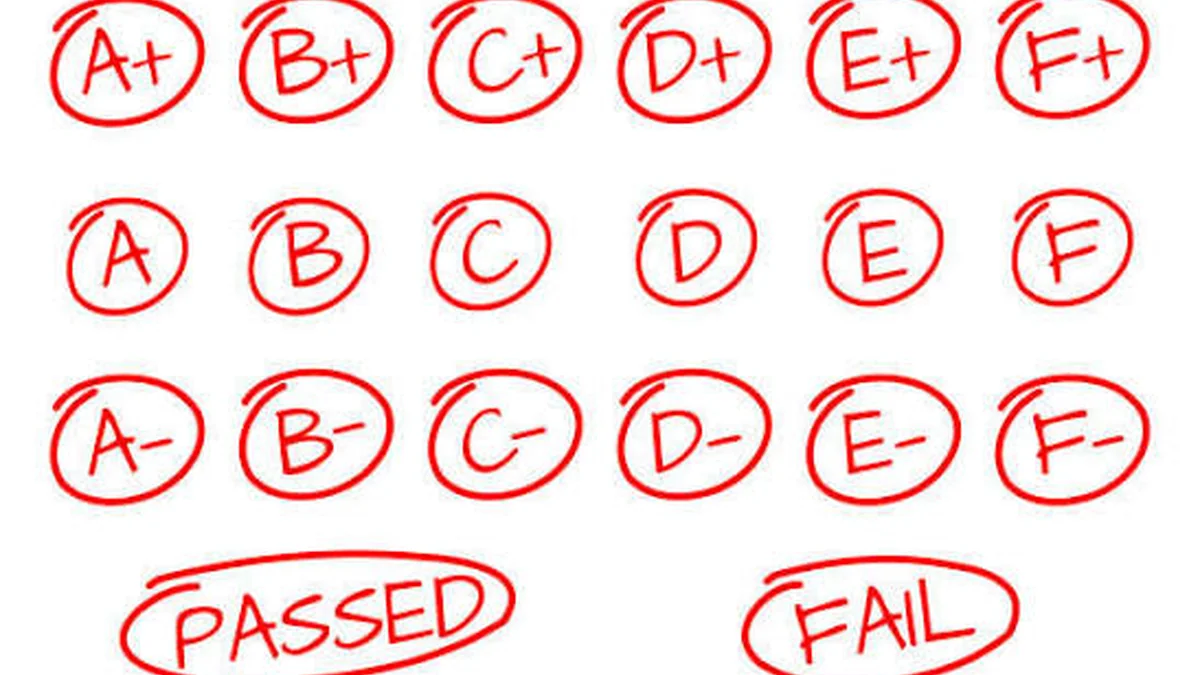
You’ve got a number on your transcript — maybe an 8.4, maybe an 87%, maybe a B+ — and an application form asking for something that looks nothing like it. That mismatch is the whole problem with GPA scale conversion, and it trips up far more students than it should.
A GPA scale conversion translates your grades from one grading system into another — most often into the US 4.0 scale — using a formula or chart that maps letter grades, percentages, or points to a 0.0–4.0 range. The exact method depends on your original scale: percentage systems use grade bands, 10-point CGPA systems typically divide by 10 and multiply by 4, and credential evaluators like WES apply their own course-by-course rules rather than one blanket formula.
What GPA Scale Conversion Actually Means
Grade point average sounds like one universal thing. It isn’t. A “GPA” in Ohio, a “CGPA” in Mumbai, and a percentage average in Manila are three different measurement systems trying to describe the same underlying idea: how well a student performed across their coursework.
The 4.0 scale became the default reference point mostly because so much of US higher ed uses it, and because international applications, scholarship boards, and employers needed something to standardize against. So when you’re applying to a US or Canadian school, or when an agency evaluates your credentials, your original grades get run through a conversion so an admissions officer isn’t comparing apples to CGPAs.
Here’s the part most guides skip: there is no single, globally enforced conversion law. Formulas are widely used conventions, not government standards. That matters more than it sounds like it should — I’ll come back to it.
Converting Letter Grades and Percentages to the 4.0 Scale
If your school already grades on letters, the conversion is the most forgiving one you’ll do.
The Standard 4.0 Conversion Chart
| Letter Grade | GPA Points |
|---|---|
| A | 4.0 |
| A- | 3.7 |
| B+ | 3.3 |
| B | 3.0 |
| B- | 2.7 |
| C+ | 2.3 |
| C | 2.0 |
| C- | 1.7 |
| D+ | 1.3 |
| D | 1.0 |
| F | 0.0 |
A plus typically adds 0.3 points, a minus subtracts 0.3 — that’s the convention most US high schools and colleges use, though a handful skip plus/minus grading entirely and just use whole-point letters.
Percentage-to-GPA Chart
Percentage systems are more common outside the US, and the bands vary by institution, but a commonly used reference table looks like this:
| Percentage | Approx. GPA (4.0 scale) |
|---|---|
| 94.5–100 | 4.0 |
| 89.5–94.4 | 3.5–3.9 |
| 84.5–89.4 | 3.0–3.4 |
| 79.5–84.4 | 2.5–2.9 |
| 74.5–79.4 | 2.0–2.4 |
| 69.5–74.4 | 1.5–1.9 |
| Below 65 | Below 1.0 |
Quick Takeaway: These bands shift slightly by school. If your institution publishes its own percentage-to-GPA table, use that one over any generic chart — including this one.
Converting a 10-Point CGPA to a 4.0 GPA
This is the conversion most searched, because it’s the one most contested.
The WES Formula (and Its Limits)
The formula almost everyone reaches for first is simple division:
GPA (4.0 scale) = (CGPA ÷ 10) × 4
So an 8.5 CGPA becomes 3.4, a 9.0 becomes 3.6, and a 7.5 lands right at 3.0. It’s fast, it’s the version most calculators use, and it’s genuinely useful for a ballpark estimate before you apply anywhere.
But here’s the gap most articles gloss over: WES doesn’t actually evaluate most transcripts with one linear formula. For a course-by-course report, WES converts each individual course grade to a 4.0-scale point, then takes a credit-weighted average across all your courses — GPA = Σ(grade points × credit hours) ÷ Σ(credit hours). A course graded 85–100% might land at 4.0, a 75–84% band around 3.3, 70–74% around 3.0, and so on, then those per-course numbers get weighted by how many credit hours each course carried. Two students with the same overall CGPA can come out with slightly different WES GPAs because their course loads and credit weighting differ.
If you’re submitting a formal credential evaluation, treat the simple divide-by-10 method as a planning estimate, not your final number. The official one comes from the evaluator, using your actual per-course transcript.
When Your University Uses Its Own Formula
This is the biggest gap in most GPA-conversion content, and it’s worth sitting with. Not every Indian university even uses the linear method internally. VTU converts CGPA to percentage first using % = (CGPA − 0.5) × 10, then maps that percentage to GPA. SPPU uses % = (CGPA − 0.75) × 10. Run the same 8.5 CGPA through VTU’s formula and you get 80%, which lands in a different GPA band than the straight (8.5/10)×4 = 3.4 result.
None of this means the simple formula is wrong — it’s the most widely accepted starting point. It means you should sanity-check against your own university’s official conversion policy (usually published by the registrar or on the transcript itself) before you treat any number as final.
Converting Other Scales: 5.0, 12-Point, and ECTS
| Original Scale | Common Conversion Logic | Example |
|---|---|---|
| 5.0 weighted scale | Often already assumes AP/IB = 5.0, so divide by 1.25 to approximate unweighted 4.0 | 4.5/5.0 ≈ 3.6/4.0 |
| 12-point scale (some European/African systems) | Divide by 12, multiply by 4 | 9/12 × 4 = 3.0 |
| ECTS grades (A–F, European) | Mapped by grade band, not points — an ECTS “A” generally aligns to 4.0, “B” to roughly 3.3–3.7 | Varies by institution |
| UK degree classification | First-class ≈ 3.7–4.0, Upper Second (2:1) ≈ 3.3–3.7, Lower Second (2:2) ≈ 2.7–3.0 | Institution-dependent |
Quick Takeaway: The further your original scale is from a straightforward point system, the less reliable a generic formula becomes. ECTS and UK classifications especially are graded on distribution and cohort performance, not a fixed points ladder — treat any 4.0 equivalent here as a rough estimate.
How WES and Other Credential Evaluators Really Calculate Your GPA
Because this comes up constantly in international applications: a credential evaluation service like WES or ECE isn’t running your transcript through a single spreadsheet formula. They assess country-specific grading norms, degree structure, and — for course-by-course reports — individual grades against credit hours. That’s why two calculators can give you two “official-sounding” numbers that don’t match: one is doing a linear scale conversion, the other is estimating a credit-weighted, course-by-course result closer to what an actual evaluator produces.
If a university specifically requires a WES or ECE evaluation, don’t submit a DIY conversion as your final number — use it to gauge where you stand, then get the official report.
Weighted vs. Unweighted GPA — Why It Changes Your Conversion
Before you convert anything, check whether your GPA is weighted or unweighted, because converting the wrong one skews your result.
- Unweighted GPA treats every course the same regardless of difficulty. The scale tops out at 4.0 no matter what.
- Weighted GPA adds points for harder courses — commonly a full point (5.0 total) for AP or IB classes, and a half point (4.5) for honors classes.
If your school reports a weighted 5.0-scale GPA and you convert it as if it were an unweighted 4.0 GPA, you’ll under- or overstate your standing depending on the direction. Always confirm which version your transcript is showing before you touch a formula.
Step-by-Step: Convert Your Own GPA
- Find your current GPA or CGPA on your official transcript — not a rounded number from memory.
- Confirm the scale it’s reported on (4.0, 5.0, 10-point, percentage, ECTS, etc.) and whether it’s weighted.
- Pick the matching formula or chart from the sections above.
- Run the calculation and round to two decimal places for most applications — some institutions specify their own rounding rule, so check the application instructions.
- Cross-check against your university’s published conversion policy, if one exists, especially for 10-point and percentage scales.
- Keep a record of the method you used. Some applications ask you to explain your conversion, particularly for scholarship or grad school forms.
Common GPA Conversion Mistakes to Avoid
- Converting a weighted GPA as if it were unweighted (or vice versa) — check which one you actually have first.
- Assuming one formula works everywhere. VTU, SPPU, and general WES conversions can all produce different results from the same starting CGPA.
- Skipping official credential evaluation when it’s required. A DIY number is a planning tool, not a substitute for WES or ECE when the application demands it.
- Rounding too early in multi-step calculations, which compounds small errors across several courses.
- Ignoring plus/minus grading when your school uses it — a straight A/B/C/D/F chart will overstate or understate your real average.
Converting your GPA isn’t just a math exercise — it’s how admissions committees, scholarship boards, and employers compare you fairly against applicants from completely different grading systems. Use the formulas and charts above to get a solid estimate, but when an application specifically requires an official credential evaluation, treat your DIY number as a planning tool and get the formal report before you submit anything.
Try this tool for a quick conversion.
FAQ
How do you convert your GPA to a 4.0 scale?
Match your original scale to the right method: letter grades map directly to points (A=4.0, B=3.0, etc.), percentages use grade-band charts, and other point scales (like 10-point CGPA) typically use proportional formulas — divide by your scale’s maximum, then multiply by 4.
How is CGPA converted to GPA?
The most common method divides your CGPA by its maximum (usually 10), then multiplies by 4: GPA = (CGPA ÷ 10) × 4. Some universities convert to percentage first using their own formula before mapping to GPA.
Is 8.5 CGPA a good GPA?
An 8.5 CGPA on a 10-point scale converts to roughly 3.4 on the 4.0 scale using the standard formula, which is a competitive GPA for most graduate programs and many undergraduate ones, though “good” depends on the specific school’s typical admitted range.
What is the formula for WES GPA?
WES calculates a credit-weighted average of per-course grade points: GPA = Σ(grade points × credit hours) ÷ Σ(credit hours), where each course grade is first converted individually rather than using one overall scale-to-scale formula.
How do you convert percentage to GPA?
Match your percentage to a grade band — roughly 94.5%+ equals 4.0, with bands stepping down from there — though exact cutoffs vary by institution, so check your school’s own chart when one is published.
Do all universities use the same GPA conversion formula?
No. While the proportional method is the most widely used starting point, some universities (like VTU or SPPU in India) apply their own percentage-conversion formulas first, which can produce a different final GPA than the standard method.
What’s the difference between weighted and unweighted GPA?
Unweighted GPA scores every class the same on a 4.0 max; weighted GPA adds extra points for harder courses like AP or IB (often up to 5.0), so the two numbers aren’t directly comparable without adjusting first.
Is a 3.0 GPA equivalent to what percentage?
On common conversion charts, a 3.0 GPA typically aligns to roughly the 84–85% range, though the exact percentage band depends on which chart your school or the receiving institution uses.
