

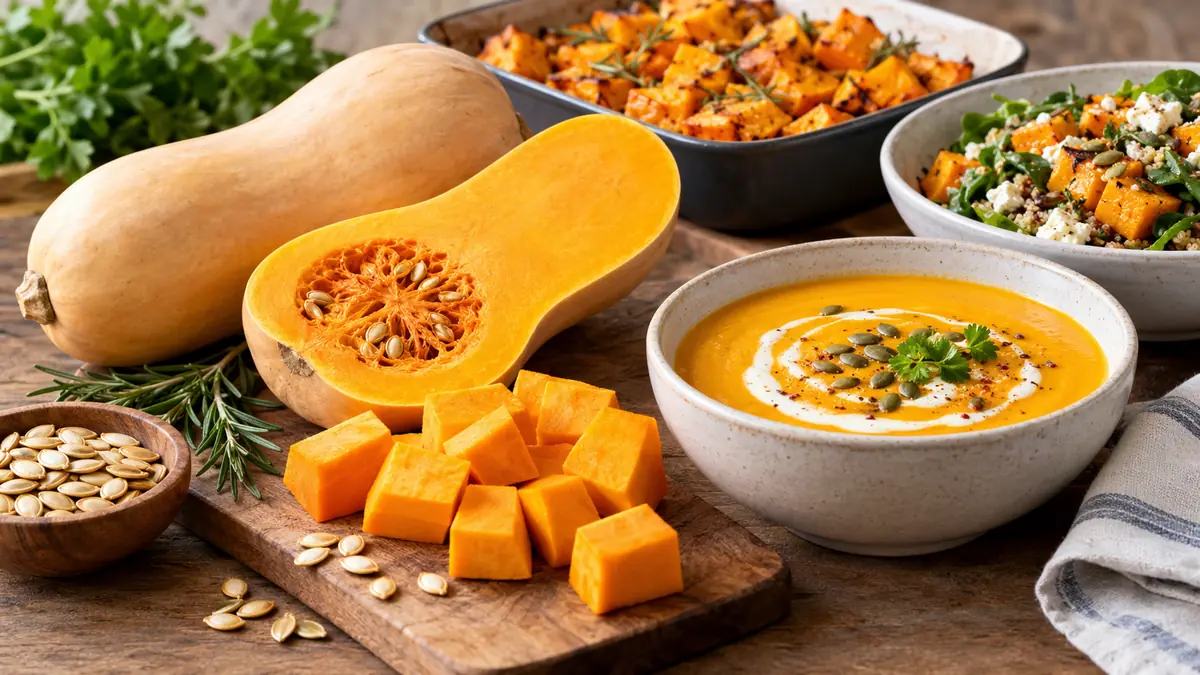
With its creamy texture, naturally sweet flavor, and vibrant orange flesh, butternut squash is one of the most versatile ingredients in the kitchen. Yet its tough skin, unusual shape, and large seed cavity can make preparing it seem more complicated than it really is.
Once you know how to select, peel, cut, and cook it, this winter squash becomes an easy addition to soups, roasted vegetables, salads, pasta, and comforting family meals.
Butternut squash is a type of winter squash belonging to the species Cucurbita moschata. It has a tan exterior, orange flesh, and a mild, sweet, slightly nutty flavor. Rich in beta-carotene, vitamin A, vitamin C, potassium, and dietary fiber, it can be roasted, steamed, boiled, mashed, or blended into soups.
What Is Butternut Squash?
Butternut squash is a winter squash commonly grown and harvested during the warmer months and early autumn. Despite its seasonal name, it is typically harvested when mature and stored for use throughout autumn and winter.
Botanically, it is a fruit because it develops from a flower and contains seeds. In cooking, however, it is treated as a vegetable.
It belongs to the Cucurbitaceae family, alongside pumpkins, cucumbers, zucchini, and other gourds.
Appearance, Taste, and Texture
A mature butternut squash has several recognizable characteristics:
- Shape: A long, cylindrical neck and rounded, bulbous base.
- Skin: Smooth, firm, beige or light tan.
- Flesh: Deep yellow-orange, becoming softer and richer in color when cooked.
- Seeds: Flat, cream-colored seeds concentrated in the rounded lower section.
- Flavor: Mildly sweet, earthy, and nutty.
- Texture: Dense when raw but tender, creamy, and sometimes silky when cooked.
The long neck contains solid flesh without a seed cavity, making it particularly convenient for slicing into uniform cubes.
The rounded bottom contains the seeds and stringy fibers, which should be scooped out before most cooking methods.
Is Butternut Squash a Pumpkin?
Butternut squash and pumpkins are closely related members of the same plant family, but they are not necessarily the same botanical species or culinary variety.
Most familiar orange carving pumpkins belong to Cucurbita pepo, while butternut squash belongs to Cucurbita moschata.
Some pumpkins also belong to Cucurbita moschata, so the distinction is not as simple as calling them completely unrelated vegetables.
In recipes, butternut squash can often replace pumpkin because both develop a smooth, mildly sweet texture when cooked.
Butternut Squash Nutrition Facts
Butternut squash provides carbohydrates, fiber, vitamins, minerals, and naturally occurring plant pigments.
Its orange color comes primarily from carotenoids, including beta-carotene, which the body can convert into vitamin A.
According to USDA FoodData Central reference values, approximately one cup of raw, cubed butternut squash (140 grams) contains:
| Nutrient | Approximate amount |
|---|---|
| Calories | 63 kcal |
| Carbohydrates | 16.4 g |
| Dietary fiber | 2.8 g |
| Protein | 1.4 g |
| Total fat | 0.1 g |
| Potassium | 493 mg |
| Vitamin C | 29 mg |
| Calcium | 67 mg |
| Magnesium | 48 mg |
| Vitamin A | 745 mcg RAE |
These figures are approximate. Actual values depend on the variety, growing conditions, serving size, and preparation method.
Cooking can also change nutrient concentrations, particularly when water-soluble vitamins are lost into cooking liquid.
Is Butternut Squash High in Carbohydrates?
Butternut squash contains more carbohydrates than many non-starchy vegetables, such as spinach, cucumber, and broccoli.
However, it generally contains fewer carbohydrates per equivalent weight than potatoes.
Its carbohydrates consist of natural sugars, starch, and fiber. The exact balance changes as the squash matures and during storage.
For people monitoring carbohydrate intake, portion size and the other ingredients in a meal matter more than simply labeling the vegetable as high or low in carbohydrates.
Butternut Squash vs. Sweet Potato
Both vegetables are nutritious, naturally sweet, and useful in similar recipes, but their nutritional profiles differ.
| Feature | Butternut squash | Sweet potato |
|---|---|---|
| Botanical family | Cucurbitaceae | Convolvulaceae |
| Texture when cooked | Soft, creamy | Dense, creamy |
| Flavor | Mildly sweet, nutty | Sweeter, earthy |
| Calories per 100 g, raw | About 45 | About 86 |
| Carbohydrates per 100 g, raw | About 12 g | About 20 g |
| Notable nutrients | Vitamin A, vitamin C, potassium | Vitamin A, potassium, fiber |
| Common uses | Soup, roasting, purée | Baking, roasting, mash |
Neither vegetable is universally healthier. Butternut squash is useful for lighter, water-rich dishes, while sweet potatoes offer more energy and carbohydrates per gram.
Health Benefits of Butternut Squash
The nutritional benefits of butternut squash come from its combination of carotenoids, vitamin C, potassium, fiber, and other micronutrients.
It can support a balanced diet, although no single vegetable can prevent or cure disease.
1. Supports Normal Vision
Butternut squash is particularly rich in beta-carotene, a provitamin A carotenoid.
The body converts beta-carotene into vitamin A as needed. Vitamin A contributes to normal vision, especially the ability to see in low-light conditions.
It also supports the maintenance of healthy epithelial tissues, including tissues covering the surface of the eyes.
Eating beta-carotene-rich vegetables is one way to obtain vitamin A through food.
2. Contributes to Immune Function
Vitamin A and vitamin C both play roles in normal immune system function.
Vitamin A helps maintain the integrity of protective tissues, while vitamin C supports immune cell activity and normal tissue repair.
Butternut squash provides both nutrients, making it a useful addition to a varied diet that includes other vegetables, fruits, protein sources, and whole grains.
3. Supports Digestive Health
Dietary fiber contributes to normal bowel function and helps support regular digestion.
Butternut squash provides a moderate amount of fiber, particularly when eaten as part of meals containing legumes, whole grains, or other vegetables.
Fiber also contributes to feelings of fullness.
For a fiber-rich meal, combine roasted squash with lentils, chickpeas, or quinoa rather than relying on squash alone.
4. Provides Potassium for Normal Body Function
Potassium is an essential mineral involved in nerve signaling, muscle contraction, and fluid balance.
Adequate potassium intake is associated with healthy blood pressure regulation, particularly when combined with an overall dietary pattern that is not excessive in sodium.
Butternut squash is a useful dietary source of potassium.
People with kidney disease or those prescribed potassium-restricted diets should follow individualized medical advice rather than assuming high-potassium foods are always appropriate.
5. Supplies Antioxidant Compounds
Butternut squash contains carotenoids and vitamin C, both associated with antioxidant activity.
Antioxidants help protect cells from oxidative damage caused by reactive molecules.
However, the presence of antioxidants in a food does not mean eating that food has been proven to prevent cancer, reverse aging, or treat chronic diseases.
The strongest practical benefit comes from regularly eating a variety of colorful vegetables.
6. Can Fit Into Weight-Management Meals
Because butternut squash contains substantial water, relatively few calories per gram, and some dietary fiber, it can contribute volume and satisfaction to meals.
Roasted squash, vegetable soup, and squash purée can be useful alternatives to more energy-dense preparations.
The overall calorie content depends heavily on added ingredients. Butter, cream, cheese, oils, and sweeteners can significantly increase the energy content of a squash-based dish.
How to Choose and Store Butternut Squash
Choosing a mature, undamaged squash makes preparation easier and improves the chances of good flavor and storage life.
How to Choose a Ripe Butternut Squash
Look for a squash with:
- Uniform beige or tan skin rather than large green patches.
- A firm exterior without soft or sunken areas.
- A relatively heavy feel for its size.
- A dry, intact stem when present.
- No visible mold, leaking liquid, or deep cracks.
Minor surface marks are usually harmless, but extensive bruising or soft spots can indicate deterioration.
A mature squash generally has a hard rind that is difficult to dent with a fingernail.
How Long Does Butternut Squash Last?
Whole, uncut squash stores much longer than cut squash because its protective rind remains intact.
| Storage method | Typical storage period |
|---|---|
| Whole, cool and dry | About 1–3 months, sometimes longer |
| Raw, peeled and cut, refrigerated | About 3–5 days |
| Cooked, refrigerated | About 3–4 days |
| Frozen, properly packaged | Best quality within roughly 8–12 months |
These are general quality and storage guidelines, not guarantees. Storage life varies with maturity, temperature, handling, and initial condition.
Whole squash should be kept in a cool, dry, well-ventilated location away from direct sunlight.
Avoid storing whole squash in a damp environment, which encourages mold and decay.
Can You Freeze Butternut Squash?
Yes. Butternut squash freezes well, particularly after blanching or cooking.
For raw cubes intended for longer freezer storage:
- Wash, peel, and remove the seeds.
- Cut the flesh into evenly sized pieces.
- Blanch the cubes briefly in boiling water, then cool promptly in ice water.
- Drain and dry thoroughly.
- Spread the cubes on a tray and freeze until firm.
- Transfer to freezer-safe bags or airtight containers.
Blanching helps preserve color, texture, and flavor during frozen storage.
Cooked squash can also be mashed or puréed before freezing. Divide it into meal-sized portions so you only thaw what you need.
How to Peel and Cut Butternut Squash Safely
The hard rind and rounded shape make cutting butternut squash more challenging than cutting softer vegetables.
A sharp chef’s knife, stable cutting board, and controlled movements are essential.
Step-by-Step Cutting Method
Preparation time: approximately 10–15 minutes
- Wash the exterior. Rinse the squash under running water and scrub away visible dirt before cutting.
- Trim the ends. Carefully remove a small section from the stem and bottom to create flatter surfaces.
- Separate the neck and base. Cut across the squash where the straight neck meets the rounded bulb.
- Peel the skin. Use a sturdy vegetable peeler or carefully remove the rind with a knife.
- Halve the bulb. Stand the rounded section on a stable cut surface and cut it vertically.
- Remove the seeds. Scoop out the seeds and fibrous strands with a spoon.
- Cut into pieces. Slice the flesh into strips, then cubes of approximately equal size.
Uniform pieces cook more evenly and are less likely to produce a mixture of burnt edges and undercooked centers.
Do You Have to Peel Butternut Squash?
No. The skin is edible when thoroughly cooked, although it can remain noticeably firmer than the flesh.
For roasted halves or wedges, leaving the skin on is often convenient. The softened flesh can be scooped out after cooking.
For smooth soups, mashed squash, and delicate pasta fillings, peeling usually produces a more consistent texture.
Can You Eat Butternut Squash Raw?
Yes, butternut squash can be eaten raw when it is fresh, properly washed, and prepared hygienically.
Its texture is quite firm, so raw squash works best when finely grated or shaved into thin ribbons.
Raw squash can be mixed with lemon juice, olive oil, and shredded vegetables for a crunchy salad.
Avoid eating squash that tastes unusually or intensely bitter. Extreme bitterness can indicate elevated cucurbitacins, naturally occurring compounds that can cause gastrointestinal illness. Cooking does not reliably eliminate these compounds.
How to Cook Butternut Squash
Butternut squash can be roasted, steamed, boiled, sautéed, microwaved, or cooked in an air fryer.
Each method produces a slightly different result. Roasting encourages browning and concentrates sweetness, while steaming and boiling create softer flesh suitable for purées.
Cooking Methods and Times
| Cooking method | Approximate time | Best uses |
|---|---|---|
| Oven roasting, cubes | 25–35 minutes | Side dishes, salads |
| Oven roasting, halves | 45–75 minutes | Stuffed squash, purée |
| Boiling, cubes | 10–15 minutes | Mash, soups |
| Steaming, cubes | 12–20 minutes | Purée, meal preparation |
| Air frying, cubes | 15–22 minutes | Crispy-edged vegetables |
| Sautéing, small cubes | 15–20 minutes | Skillet meals |
| Microwaving, cubes | 8–12 minutes | Quick preparation |
Cooking times vary according to cube size, appliance performance, and starting temperature. The squash is ready when a fork or knife slides easily into the thickest part.
How to Roast Butternut Squash in the Oven
Roasting is one of the simplest ways to develop its naturally sweet flavor.
How To Roast Butternut Squash Cubes – with Seasoning Ideas & Recipes
Roasted Whole Butternut Squash (+Recipes Ideas To Put It To Use)
12 Reasons to Love Butternut Squash | Whole Foods Market
8
Roasting produces tender centers and browned edges, particularly when pieces are spaced apart.
Ingredients
- 1 medium butternut squash
- 1–2 tablespoons olive oil
- ½ teaspoon salt, or to taste
- ¼ teaspoon black pepper
- Optional rosemary, thyme, paprika, or garlic powder
Instructions
- Preheat the oven to 400°F (200°C), or 180°C for a fan-assisted oven.
- Peel and deseed the squash, then cut it into approximately 1-inch cubes.
- Toss the cubes with olive oil, salt, pepper, and optional seasonings.
- Spread the pieces across a baking tray in a single layer.
- Roast for approximately 25–35 minutes, turning halfway through.
- Remove when the flesh is tender and the edges are lightly caramelized.
Avoid overcrowding the baking tray. When pieces are packed tightly, trapped moisture causes steaming rather than browning.
This approach is consistent with common oven-roasting guidance for winter squash. tollbit.bbcgoodfood.com+1
How to Make Butternut Squash Soup
Soupe de butternut ultra onctueuse, la recette réconfortante qui plaît à tous – Le Petit Flaubert
Butternut squash soup is popular because cooked squash blends into a naturally creamy consistency, even without heavy cream.
Ingredients for approximately four servings
- 1 medium butternut squash, peeled and cubed
- 1 onion, chopped
- 2 garlic cloves, minced
- 1 tablespoon olive oil
- 3–4 cups vegetable broth
- ½ teaspoon ground cumin
- Salt and pepper to taste
- Optional coconut milk or cream
Method
- Heat olive oil in a large saucepan.
- Add the onion and cook until softened, approximately five minutes.
- Stir in the garlic and cumin for about 30 seconds.
- Add the squash and vegetable broth.
- Bring to a gentle boil, then reduce the heat.
- Simmer for 20–25 minutes until the squash becomes tender.
- Blend until smooth using an immersion blender or countertop blender.
- Adjust the seasoning and consistency before serving.
If using a countertop blender, allow the soup to cool somewhat and follow the manufacturer’s instructions for blending hot liquids.
For a richer flavor, roast the squash before adding it to the soup. Roasting develops browned notes that complement the vegetable’s natural sweetness.
How to Cook Butternut Squash in an Air Fryer
Air frying is useful for smaller portions and can produce lightly crisp edges without heating a full-size oven.
Cut the squash into ¾-inch cubes, toss with a little oil, and season. Cook at approximately 375°F (190°C) for 15–22 minutes, shaking the basket halfway through.
Cook in batches if necessary. Excessive layering prevents hot air from circulating evenly.
How to Steam or Boil Butternut Squash
Steaming is a convenient option when the goal is soft flesh without added oil.
Place peeled cubes in a steamer basket above simmering water, cover, and cook for approximately 12–20 minutes.
For boiling, add the cubes to lightly salted boiling water and cook for 10–15 minutes.
Drain thoroughly before mashing. Excess cooking water can make the finished purée thin and watery.
Steaming may retain more water-soluble nutrients than boiling, although the difference depends on cooking duration and whether the boiling liquid is consumed.
Easy Butternut Squash Recipes and Serving Ideas
Butternut squash works with savory spices, fresh herbs, creamy dairy products, legumes, grains, and even sweet baking ingredients.
Its versatility explains why it appears in recipes ranging from Mediterranean salads to Indian-inspired curries and Italian risotto. BBC Good Food+1
Butternut Squash Curry
21 Tasty Plant-Based and Vegan Fall Recipes
For a simple vegetarian curry, combine cubed squash with onion, garlic, ginger, tomatoes, chickpeas, and curry spices.
Simmer the ingredients in coconut milk or vegetable broth until the squash is tender.
Cumin, coriander, turmeric, and chili powder complement its sweetness, while fresh lime juice adds acidity.
Serve with basmati rice, brown rice, or flatbread.
Butternut Squash Risotto
Butternut squash pairs particularly well with Arborio rice because its soft texture complements the creamy consistency of risotto.
Roast the squash separately while cooking the rice gradually with warm stock.
Stir some cooked squash into the risotto for a creamy texture and reserve a few roasted cubes for serving.
Fresh sage, Parmesan cheese, and black pepper create a balanced savory flavor.
For a dairy-free version, omit Parmesan and finish with olive oil and nutritional yeast.
Butternut Squash Salad
Roasted squash adds warmth and sweetness to salads containing leafy greens and grains.
A simple combination includes:
- Roasted squash cubes
- Baby spinach or arugula
- Cooked quinoa
- Crumbled feta cheese
- Toasted pumpkin seeds
- Lemon and olive oil dressing
The contrast between warm squash, fresh greens, and crunchy seeds makes the dish more satisfying than a plain vegetable salad.
Butternut Squash Pasta Sauce
Cooked squash can be blended into a smooth pasta sauce.
Combine roasted squash with sautéed garlic, a little vegetable broth, olive oil, and grated Parmesan or nutritional yeast.
Blend until smooth, then toss with cooked pasta.
A small amount of pasta cooking water helps loosen the sauce without making it watery.
Nutmeg, sage, and black pepper are particularly effective seasonings.
Mashed Butternut Squash
Mashed squash is a simple alternative to mashed potatoes.
Steam or roast the flesh until tender, then mash with a fork or potato masher.
For a savory version, add olive oil, salt, pepper, and roasted garlic.
For a sweeter version, use a little cinnamon and nutmeg. Added sugar is generally unnecessary because properly cooked squash already has natural sweetness.
Butternut Squash Seeds, Skin, and Food Waste
Many people discard the seeds and skin automatically, but parts of the squash that are often thrown away can be used in cooking.
Can You Eat Butternut Squash Seeds?
Yes. The seeds are edible and can be roasted similarly to pumpkin seeds.
To prepare them, remove the seeds from the cavity, separate the fibrous strands, rinse, and dry thoroughly.
Toss with a small amount of oil and seasoning, then roast at approximately 325°F (165°C) for 15–25 minutes, stirring occasionally.
Watch them closely because smaller seeds can brown quickly.
Roasted seeds can be sprinkled over soups, salads, and grain bowls.
Is Butternut Squash Skin Edible?
The skin is edible, especially after thorough roasting, but texture depends on maturity and cooking method.
Young or thin-skinned specimens may soften more readily than large, mature squash.
For a silky soup or smooth purée, removing the skin is usually preferable.
Can You Use the Scraps?
Clean squash peelings and trimmed ends can be added to homemade vegetable stock, provided they are fresh and free from spoilage.
Avoid using moldy, rotten, or intensely bitter pieces.
Composting unusable scraps is another way to reduce kitchen waste.
Butternut Squash vs. Other Winter Squash Varieties
Although winter squash varieties share some culinary characteristics, they differ in shape, sweetness, moisture, and texture.
| Variety | Flavor | Texture | Common uses |
|---|---|---|---|
| Butternut squash | Sweet, mildly nutty | Creamy, smooth | Soup, roasting, purée |
| Acorn squash | Mild, earthy | Tender, slightly fibrous | Stuffed halves, roasting |
| Kabocha squash | Rich, sweet | Dense, relatively dry | Curries, roasting |
| Spaghetti squash | Mild, neutral | String-like strands | Vegetable noodle alternatives |
| Delicata squash | Sweet, buttery | Tender | Roasted rings, wedges |
| Pumpkin | Varies by cultivar | Soft to dense | Pie, soup, purée |
Butternut Squash vs. Pumpkin
Butternut squash generally has a smooth, dense flesh that works particularly well in creamy soups and purées.
Pumpkin varies much more by cultivar. Some varieties have dense, sweet flesh suitable for baking, while large carving pumpkins can be relatively watery and less flavorful.
For pumpkin pie, butternut squash can make an effective substitute when cooked, puréed, and drained if necessary.
Butternut Squash vs. Acorn Squash
Acorn squash is smaller and rounder, with pronounced ridges and dark green skin.
Its flesh is usually less uniformly creamy than butternut squash.
Acorn squash is particularly convenient for roasting in halves, while the long neck of butternut squash makes it easier to produce uniform cubes.
Butternut Squash vs. Kabocha Squash
Kabocha squash has a dense, sweet, chestnut-like quality.
It often contains less moisture than butternut squash when cooked, giving it a somewhat drier, starchier texture.
Both work well in curries, roasted dishes, and vegetable stews, but they may require different cooking times.
Growing Butternut Squash at Home
Butternut squash grows on sprawling vines and requires warm temperatures, fertile soil, adequate water, and a sufficiently long growing season.
It is commonly grown as an annual crop, even though its botanical species originates from tropical and subtropical regions of the Americas.
Climate and Growing Conditions
Butternut squash grows best in full sunlight with well-drained, fertile soil.
Important growing requirements include:
| Growing factor | General recommendation |
|---|---|
| Sunlight | At least 6–8 hours daily |
| Soil | Fertile, well-drained |
| Soil pH | Approximately 6.0–6.8 |
| Planting season | After frost danger has passed |
| Germination temperature | Warm soil, preferably around 70–95°F |
| Water | Consistent moisture, especially during flowering and fruit development |
| Harvest time | Commonly 90–120 days, depending on variety |
Plants need sufficient space for their vines. Compact or bush-type cultivars may be better suited to smaller gardens.
How to Plant Butternut Squash Seeds
- Choose a sunny location with good drainage.
- Enrich the soil with mature compost if needed.
- Sow seeds approximately one inch deep after the soil has warmed.
- Space plants according to the selected cultivar’s seed packet.
- Water gently and maintain consistent soil moisture.
- Thin seedlings if necessary to prevent overcrowding.
- Mulch around plants to reduce weeds and soil moisture loss.
Squash plants produce separate male and female flowers on the same plant.
Pollinators, particularly bees, transfer pollen between flowers and are important for successful fruit development.
Poor pollination may cause young fruit to stop growing or decay.
When Is Butternut Squash Ready to Harvest?
A mature squash usually develops a firm, tan rind and loses most of its green coloration.
The stem may become dry and corky as the fruit matures.
Harvest before damaging frost and cut the stem with clean pruning shears, leaving a short section attached.
Avoid lifting or carrying squash by its stem because the stem may break, creating an entry point for decay.
Curing and Long-Term Storage
Some winter squash benefit from a curing period that allows minor surface injuries to heal and the rind to harden.
However, curing requirements vary among cultivars, and prolonged exposure to excessive heat can damage fruit.
For long-term storage, cool conditions with moderate relative humidity and good ventilation are preferable.
The University of California, Davis Postharvest Research and Extension Center identifies approximately 15°C (59°F) as a suitable long-term storage temperature for butternut squash, with moderate humidity and ventilation important for limiting deterioration. Postharvest Research and Extension Center
Common Butternut Squash Cooking Problems
Even a straightforward vegetable can produce disappointing results when moisture, temperature, or preparation is poorly controlled.
Why Is My Roasted Butternut Squash Mushy?
Mushy squash usually results from excessive moisture, overcrowding, or overcooking.
To improve texture, cut pieces evenly, dry them before seasoning, and spread them across a large baking tray.
Use enough oil to coat the pieces lightly without leaving them swimming in liquid.
Roasting at a sufficiently high temperature also encourages browning before the interior becomes excessively soft.
Why Does Butternut Squash Taste Bland?
Butternut squash has a naturally mild flavor, and underseasoning can make it taste flat.
Salt enhances its sweetness, while acidic ingredients such as lemon juice or vinegar provide contrast.
Savory ingredients including garlic, sage, rosemary, cumin, and smoked paprika add depth.
For soup, roasting the squash first can produce a richer flavor than boiling it alone.
Why Is Butternut Squash Difficult to Peel?
Mature squash develops a hard protective rind designed for storage.
A sturdy, sharp peeler generally works better than a lightweight or dull one.
If the squash is particularly difficult to handle, cooking it in halves and scooping out the flesh afterward may be safer than attempting to peel it raw.
How Can You Tell if Butternut Squash Has Gone Bad?
Signs of spoilage include:
- Soft, sunken, or leaking areas.
- Visible mold.
- A fermented or unpleasant odor.
- Slimy or extensively discolored flesh after cutting.
- Significant internal decay.
Discard squash showing these signs rather than trying to salvage heavily affected portions.
An intensely bitter taste is also a reason to stop eating it, even when the squash otherwise appears normal.
Is Butternut Squash Suitable for Different Diets?
Butternut squash fits naturally into many eating patterns, although portion sizes and preparation methods may need adjustment.
Is Butternut Squash Good for People With Diabetes?
Butternut squash can be included in meals for people with diabetes.
It contains carbohydrates, so portions should be considered within the person’s overall meal plan.
Pairing squash with protein, fiber-rich foods, and unsaturated fats can help create a balanced meal.
For example, roasted squash served with grilled fish and leafy vegetables offers a different nutritional balance from squash prepared with added sugar and a sweet glaze.
Blood glucose responses vary between individuals and depend on serving size, cooking method, and the complete meal.
Is Butternut Squash Keto-Friendly?
Butternut squash contains more net carbohydrates than many leafy and non-starchy vegetables.
It can fit into some lower-carbohydrate diets in modest portions, but larger servings may be difficult to accommodate within strict ketogenic carbohydrate limits.
The suitability depends on the person’s daily carbohydrate target.
Is Butternut Squash Gluten-Free?
Plain butternut squash is naturally gluten-free.
However, prepared squash dishes may contain gluten through sauces, breadcrumbs, seasoning blends, or other added ingredients.
People with celiac disease should also consider cross-contact during food preparation.
Can Babies Eat Butternut Squash?
Butternut squash can be introduced as a complementary food when a baby is developmentally ready for solids, typically around six months.
Cook the flesh until completely soft and serve it in an age-appropriate texture.
For younger babies, smooth purée or thoroughly mashed squash is convenient.
For baby-led feeding, soft pieces should be prepared in shapes and sizes appropriate to the baby’s developmental stage.
Avoid adding salt or sugar, and supervise the baby while eating.
Best Seasonings and Flavor Pairings
The gentle sweetness of butternut squash makes it adaptable to different cuisines.
| Flavor profile | Complementary ingredients |
|---|---|
| Classic savory | Sage, rosemary, thyme, garlic |
| Warm and aromatic | Cinnamon, nutmeg, ginger |
| Spicy | Chili flakes, cayenne, smoked paprika |
| Indian-inspired | Turmeric, cumin, coriander, garam masala |
| Mediterranean | Olive oil, feta, lemon, parsley |
| Creamy | Coconut milk, yogurt, Parmesan |
| Sweet and tangy | Apple, orange, balsamic vinegar |
| Nutty | Pumpkin seeds, walnuts, pecans |
One particularly useful principle is to balance sweetness with acidity or salt.
For example, roasted squash with feta and lemon tastes brighter than squash seasoned with sweet spices alone.
Similarly, squash curry benefits from lime juice or tomatoes because their acidity balances the richness of coconut milk.
Conclusion
Butternut squash is a nutritious, versatile winter squash that offers vitamin A precursors, vitamin C, potassium, fiber, and a naturally sweet flavor.
Its firm rind can seem intimidating, but preparation becomes straightforward with a stable cutting surface, a sharp knife, and the right cooking method. Roasting brings out sweetness, steaming creates tender flesh, and blending produces smooth soups and sauces.
For an easy introduction, start with simple roasted butternut squash cubes seasoned with olive oil, salt, pepper, and rosemary. Once comfortable with the basics, experiment with curries, risotto, salads, and homemade soup to make the most of this adaptable ingredient.
