

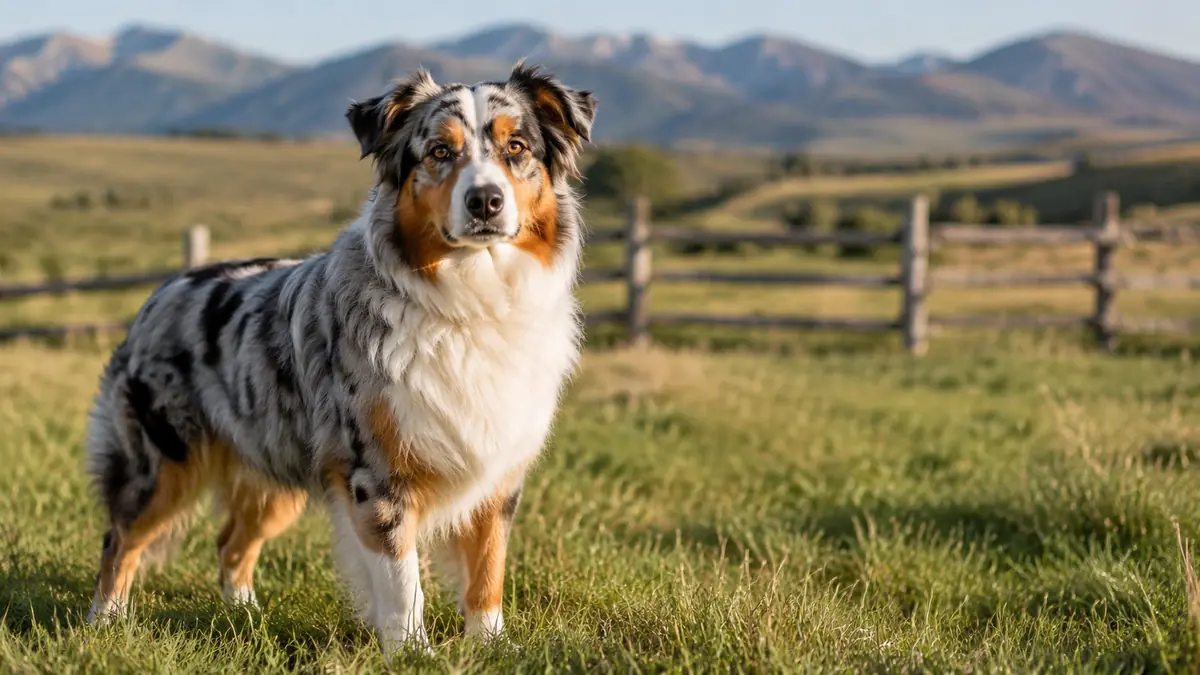
The australian shepherd is strikingly beautiful, exceptionally smart, and capable of working from sunrise to sunset. That combination attracts many owners—but its intelligence and energy can become challenging without enough exercise, training, and daily involvement.
An australian shepherd is a medium-sized American herding dog known for its athletic build, strong work drive, loyalty, and trainability. Adults generally stand 18–23 inches tall, weigh 40–65 pounds, and live about 12–15 years. Aussies thrive with active owners who provide structured exercise, mental challenges, companionship, and consistent positive-reinforcement training.
Australian Shepherd Breed Overview
| Characteristic | Typical Australian Shepherd |
|---|---|
| Breed group | Herding |
| Origin | United States |
| Height | 18–23 inches |
| Weight | 40–65 pounds |
| Lifespan | Approximately 12–15 years |
| Coat | Medium-length, weather-resistant double coat |
| Recognized colors | Black, red, blue merle, and red merle |
| Temperament | Intelligent, energetic, loyal, alert |
| Exercise needs | High |
| Grooming needs | Moderate |
| Shedding | Moderate to heavy |
| Trainability | Very high |
| Best suited to | Active, involved households |
Individual dogs can fall outside these averages. Sex, genetics, nutrition, working lines, and general health all influence adult size, appearance, and behavior.
Where Did the Australian Shepherd Originate?
Despite its name, the Australian Shepherd was developed primarily in the United States—not Australia.
The breed’s precise ancestry is complex. Its history is commonly connected with European herding dogs and Basque shepherds who traveled with their sheep through Australia before arriving in the western United States. American ranchers then refined these capable stock dogs for farm and ranch work, particularly in California and other western states.
Aussies became valued for their stamina, agility, intelligence, and ability to control livestock. Their visibility increased through rodeos, horse shows, and Western performances, where they both worked cattle and entertained crowds with trained routines.
The Australian Shepherd Club of America was established in 1957. The American Kennel Club later recognized the breed in 1993, placing it in the Herding Group.
Modern Aussies still herd sheep and cattle, but they also participate successfully in:
- Agility
- Obedience
- Rally
- Tracking
- Flyball
- Disc dog competitions
- Search and rescue
- Therapy work
- Scent work
- Dock diving
That working history matters. Even an Aussie that has never encountered livestock may retain strong instincts to watch movement, chase, gather, and control.
Australian Shepherd Size and Appearance
The australian shepherd is a balanced, athletic dog with moderate bone and a body slightly longer than it is tall. It should appear strong and agile without looking bulky or delicate.
According to the official breed standard, preferred heights are:
- Males: 20–23 inches at the shoulder
- Females: 18–21 inches at the shoulder
Adult weight commonly ranges from 40 to 65 pounds, although the breed standard emphasizes overall balance rather than prescribing a specific weight.
Coat Colors and Markings
Four base colors are recognized:
- Black
- Red
- Blue merle
- Red merle
Any of these may appear with or without white markings and copper points. This produces combinations such as black tricolor, red tricolor, blue merle with white and copper, or solid-colored coats with minimal markings.
Merle is a mottled pattern rather than a single color. Blue merle coats combine black, gray, and white areas, while red merle coats contain shades of red, cream, and liver.
A dog’s appearance does not determine its personality or working ability. Coat color should also never take priority over health, sound temperament, and responsible breeding.
Eyes and Tails
Australian Shepherd eyes may be brown, blue, amber, or a combination. Some dogs have one eye of each color, known as heterochromia. Others have more than one color within the same eye.
Aussies may be born with:
- A full-length tail
- A naturally bobbed tail
- A partial-length tail
Tail docking practices and laws vary by location. A natural bobtail is a genetic trait and should not automatically be assumed to be a surgically docked tail.
Is a Mini Australian Shepherd the Same Breed?
No. “Mini Australian Shepherd” is an informal label frequently used in advertising, but the smaller breed recognized by the American Kennel Club is the Miniature American Shepherd.
The Miniature American Shepherd shares historical connections and several characteristics with the Aussie, but it has a separate breed standard. Anyone considering a smaller dog should verify its registered breed instead of relying on marketing terms such as “mini,” “toy,” or “teacup Aussie.”
Australian Shepherd Temperament and Personality
The typical Australian Shepherd temperament combines intelligence, loyalty, alertness, energy, and a strong desire to participate. Many Aussies closely monitor their owners and move from room to room to remain involved.
They often form deep bonds with their families. This devotion can make them responsive companions, but it also means they may struggle when routinely left alone for long periods.
Common personality traits include:
- Fast learning
- Strong environmental awareness
- Enthusiasm for work and play
- Reserved behavior around unfamiliar people
- Protective or watchdog tendencies
- Sensitivity to movement and sound
- Natural herding behavior
- Persistence when pursuing a goal
Temperament varies between individuals. Genetics, early handling, socialization, training, health, and daily living conditions all shape behavior.
Are Australian Shepherds Smart?
Australian Shepherds are highly intelligent and usually learn new cues quickly. However, intelligence does not automatically produce an easy pet.
A bored Aussie can apply its problem-solving ability to opening gates, escaping yards, chasing moving objects, stealing household items, or inventing attention-seeking games. Smart dogs need constructive outlets—not simply more freedom.
Training works best when it includes variety, clear expectations, short sessions, and meaningful rewards. Repeating the same drill too often may cause frustration or loss of interest.
Are Australian Shepherds Affectionate?
Many Aussies are extremely affectionate with people they know. Some enjoy physical closeness, while others express attachment by following family members, bringing toys, watching activities, or resting nearby.
They can be cautious with strangers. Calm neutrality is acceptable, but persistent fear or uncontrolled aggression should not be dismissed as normal breed behavior.
Thoughtful socialization helps puppies learn that unfamiliar people, animals, surfaces, sounds, and environments are manageable. Socialization means creating safe, positive experiences—not forcing a frightened puppy to interact.
Are Australian Shepherds Good Family Dogs?
An Australian Shepherd can be an excellent family dog when its activity level, training needs, and herding instincts fit the household. It is generally better suited to an involved family than one seeking a quiet, low-maintenance companion.
Living With Children
Well-socialized Aussies can be playful and devoted around children. Their speed and enthusiasm, however, may overwhelm toddlers. Some attempt to herd running children by circling, blocking, chasing, barking, or nipping at heels.
Adults should supervise every interaction and teach children to:
- Avoid climbing on or pulling the dog
- Leave it alone while eating or sleeping
- Respect its bed or crate
- Stop play if the dog becomes overstimulated
- Use toys rather than hands for energetic games
Herding behavior should be redirected into appropriate activities. Punishment may increase fear or arousal without teaching the dog what to do instead.
Living With Other Dogs and Pets
Many Aussies live successfully with other dogs, especially after careful introductions. Compatibility depends on each animal’s temperament, play style, age, and social experience.
They may also coexist with cats, but their tendency to chase movement requires management. Slow introductions, escape routes for the cat, gates, leashes, and reward-based training are safer than allowing the animals to “work it out.”
Small pets and poultry can trigger predatory or herding behavior. Never assume that obedience around people guarantees safety around vulnerable animals.
Can an Australian Shepherd Live in an Apartment?
Yes, but apartment living requires serious daily commitment. A large yard is convenient, not magical; dogs do not adequately exercise themselves simply because outdoor space exists.
Apartment owners must provide:
- Purposeful outdoor exercise
- Training and enrichment indoors
- Reliable barking management
- Regular toilet breaks
- Safe opportunities to run
- A plan for days with poor weather
An under-stimulated Aussie in a small space may bark, pace, chew, or react to hallway noises. A well-trained and fulfilled dog may settle comfortably after its needs are met.
Australian Shepherd Exercise Requirements
Healthy adult Aussies commonly need about 90–120 minutes of purposeful physical activity each day, depending on age, health, breeding, and intensity. This is a practical guideline rather than a rigid prescription.
Exercise should include more than repetitive ball throwing. A balanced routine might combine:
- Brisk walking or hiking
- Controlled off-leash running in a secure area
- Tug, retrieve, or flirt-pole games
- Obedience or trick training
- Scent-based searches
- Herding or dog sports
- Calm decompression walks
Mental work can be surprisingly tiring. Ten focused minutes of scent searching or training may provide more value than aimless time in a yard.
Exercise Needs by Life Stage
Puppies: Use short, age-appropriate play and exploration. Avoid forced long-distance running, repeated high jumps, and excessive impact while bones and joints are developing.
Adolescents: Energy and impulsiveness often increase. These dogs need structure, skill-building, controlled social exposure, and opportunities to practice settling.
Adults: Combine aerobic exercise, strength, coordination, sniffing, training, and rest.
Seniors: Continue regular movement while adjusting intensity for arthritis, reduced stamina, vision changes, or other medical needs.
More exercise is not always the solution to restlessness. Constant high-intensity activity can create an athlete who expects nonstop stimulation. Aussies also need to learn how to relax.
Quick takeaway: Meet physical needs, challenge the brain, and deliberately reward calm behavior. That combination produces better household manners than exercise alone.
Training an Australian Shepherd
Australian Shepherd training should begin as soon as the dog enters the home. Positive reinforcement—rewarding desired behavior with food, play, access, or praise—is particularly effective with this responsive breed.
Start with practical life skills:
- Responding to its name
- Coming when called
- Walking on a loose leash
- Waiting at doors
- Dropping and leaving objects
- Settling on a mat
- Accepting grooming and handling
- Remaining calm around movement
- Spending short periods alone
Managing Herding and Chasing
Cars, bicycles, joggers, livestock, and running children can activate chase behavior. Prevent rehearsal by using leashes, secure fencing, visual barriers, and distance from triggers.
Teach the dog to notice movement and return its attention to the handler. Reward early—before staring becomes stalking, barking, or lunging. Reliable recall and emergency-stop cues are especially valuable, but they do not replace physical safety measures near roads.
Preventing Separation Problems
Because Aussies often bond intensely with their people, independence should be taught gradually.
Begin with seconds or minutes of calm separation while the puppy has a safe chew or resting place. Increase duration slowly. Dramatic departures, sudden full workdays alone, and waiting until distress becomes severe can make training harder.
Signs of separation-related distress include persistent vocalizing, destructive escape attempts, drooling, indoor elimination, pacing, or inability to eat when alone. These behaviors warrant help from a veterinarian or qualified behavior professional.
Common Training Mistakes
Owners frequently run into trouble when they:
- Rely on physical exercise but neglect mental work
- Allow chasing during puppyhood because it seems harmless
- Use inconsistent rules between family members
- Punish warning signals such as growling
- Delay socialization
- Expect immediate reliability around distractions
- Provide constant stimulation without teaching rest
The goal is not merely an exhausted dog. It is a dog that understands how to make good choices in everyday situations.
Australian Shepherd Grooming and Shedding
The Aussie has a medium-length double coat. The outer coat provides weather resistance, while the undercoat helps with insulation. It sheds throughout the year and often sheds more heavily during seasonal coat changes.
Basic Grooming Routine
Most Aussies benefit from:
- Brushing once or twice weekly
- More frequent brushing during heavy shedding
- Bathing when dirty or approximately every several weeks
- Nail trimming before nails become long
- Regular ear inspection
- Routine dental care
- Checking paws and skin after outdoor activity
A slicker brush, pin brush, and metal comb can help remove loose hair and detect tangles. Pay close attention behind the ears, around the legs, under the collar, and in the feathering, where mats can form.
Should You Shave an Australian Shepherd?
Routine shaving is generally unnecessary. It removes the protective outer coat and does not stop shedding because the hair continues its growth cycle.
Clipping may be medically necessary for surgery, severe matting, or treatment directed by a veterinarian. For ordinary maintenance, brushing, bathing, drying, and limited tidying are more appropriate.
Are Australian Shepherds Hypoallergenic?
No. Australian Shepherds shed hair and produce dander, saliva proteins, and other potential allergens. No dog breed is completely allergen-free.
Anyone with allergies should spend time around adult Aussies before making a commitment. Individual reactions can vary, and puppy exposure may not accurately predict the response to an adult coat.
Feeding and Weight Management
Feed a complete and balanced diet appropriate for the dog’s age, body condition, activity level, and medical needs. The correct quantity depends on the food’s calorie density and the individual dog—not merely the feeding chart on the package.
A healthy Aussie should generally have:
- Ribs that are easy to feel beneath a light fat covering
- A visible waist when viewed from above
- An abdominal tuck when viewed from the side
Working dogs and competitive athletes may need different calorie and nutrient plans from moderately active pets. Puppies require growth-appropriate food, while seniors may benefit from adjustments based on weight, mobility, and health.
Treats count toward daily calories. Measure meals, monitor body condition, and discuss significant weight changes with a veterinarian.
Australian Shepherd Health and Lifespan
The australian shepherd lifespan is commonly estimated at 12–15 years. Many remain active well into later life, although inherited and acquired conditions can affect longevity.
Health concerns associated with the breed include:
- Hip dysplasia
- Elbow dysplasia
- Hereditary cataracts
- Collie eye anomaly
- Progressive retinal atrophy
- Epilepsy
- Autoimmune disorders
- Certain cancers
- Multidrug sensitivity caused by an ABCB1/MDR1 mutation
Having a genetic variant or family history does not mean every dog will develop disease. Screening helps breeders make informed decisions and allows owners and veterinarians to plan appropriate care.
MDR1 Drug Sensitivity
Some Aussies carry a mutation in the ABCB1 gene, traditionally called MDR1. It affects P-glycoprotein, which helps restrict certain substances from entering the brain. Affected dogs may experience stronger or dangerous reactions to particular medications or doses.
Drugs of concern can include high-dose ivermectin, loperamide, certain sedatives, and some chemotherapy agents. Standard heartworm-prevention doses of relevant medications may still be safe when used correctly, so owners should not discontinue prescribed prevention without veterinary advice.
A DNA test can identify whether a dog has zero, one, or two copies of the mutation. Share the result with every veterinarian treating the dog, especially before anesthesia or new medication.
Eye and Joint Screening
Responsible breeding dogs should receive appropriate hip, elbow, and eye evaluations rather than relying on a routine wellness examination. DNA screening may also be recommended for inherited eye diseases and other breed-related conditions.
The Orthopedic Foundation for Animals maintains searchable health records and administers the Canine Health Information Center program. A CHIC number confirms that required tests were completed and made public; it does not necessarily mean every result was normal. Buyers should inspect the individual findings.
Why Merle-to-Merle Breeding Is Risky
Breeding two merle dogs can produce puppies that inherit two copies of the merle variant. These “double merle” puppies face a substantially increased risk of serious hearing and vision abnormalities.
The danger comes from the genetic pairing, not from an ordinary single-merle coat itself. Ethical breeders plan matings using accurate pedigrees and genetic information rather than breeding primarily for unusual colors.
Routine Preventive Care
Every Aussie should receive veterinary care based on its age, location, lifestyle, and risk factors. A preventive plan may include:
- Physical examinations
- Vaccination
- Parasite control
- Dental care
- Weight monitoring
- Blood or urine testing when appropriate
- Joint and mobility assessment
- Eye evaluation
- Prompt investigation of seizures or behavioral changes
Contact a veterinarian if the dog develops collapse, seizures, sudden vision changes, persistent limping, unusual medication reactions, or major changes in appetite and energy.
Choosing an Australian Shepherd Puppy or Rescue Dog
Before bringing home an Aussie, assess the dog’s needs honestly. Color and eye pattern are minor considerations compared with temperament, health, energy, and compatibility.
Questions for a Responsible Breeder
A responsible breeder should willingly discuss:
- Verified health results for both parents
- Temperament and working traits
- Epilepsy, eye disease, and other health history in the pedigree
- Puppy socialization and raising conditions
- How puppies are matched to homes
- Contracts and return policies
- Ongoing support throughout the dog’s life
Ask for registered names or identification details, then confirm public health records yourself. A veterinary checkup or a generic claim that the parents were “DNA tested” is not equivalent to completing all recommended breed-specific screening.
Warning signs include always-available litters, multiple unexplained designer sizes, heavy emphasis on rare colors, no verifiable health records, refusal to show where puppies are raised, and pressure to pay immediately.
Adopting an Adult Aussie
Breed-specific rescues and general shelters may have Australian Shepherds and Aussie mixes. An adult dog can offer clearer information about size, coat, energy, sociability, and household behavior.
Ask the rescue or foster caregiver about:
- Reactions to children and other animals
- Resource guarding
- Handling tolerance
- Separation behavior
- Noise sensitivity
- Chasing and escape tendencies
- Previous training
- Medical history
Rescue dogs may need time to decompress. Keep the first days predictable, limit overwhelming introductions, and establish routines gradually.
Is an Australian Shepherd Right for You?
An Aussie may suit you if you want a highly involved companion and can provide daily exercise, training, mental stimulation, and human interaction. It is especially appealing to people interested in hiking, running, advanced obedience, livestock work, or dog sports.
The breed may be a poor fit if you want:
- A consistently low-energy dog
- Minimal shedding
- Very little training
- A pet that regularly stays alone all day
- Reliable behavior without structured socialization
- A dog satisfied by occasional walks
First-time owners can succeed with an Aussie, but they should expect a learning curve and seek qualified training support early. Experience helps, yet realistic commitment matters more than a label.
Final Thoughts on the Australian Shepherd
The australian shepherd is an intelligent, athletic, and devoted working dog whose needs extend far beyond its distinctive coat. With constructive exercise, thoughtful socialization, reward-based training, preventive healthcare, and opportunities to use its brain, an Aussie can become an exceptional companion.
Before choosing one, compare the breed’s daily requirements with your actual schedule—not your ideal schedule. Meet well-adjusted adult Aussies, review verified health records, and choose a dog based on temperament and compatibility rather than color alone.
