

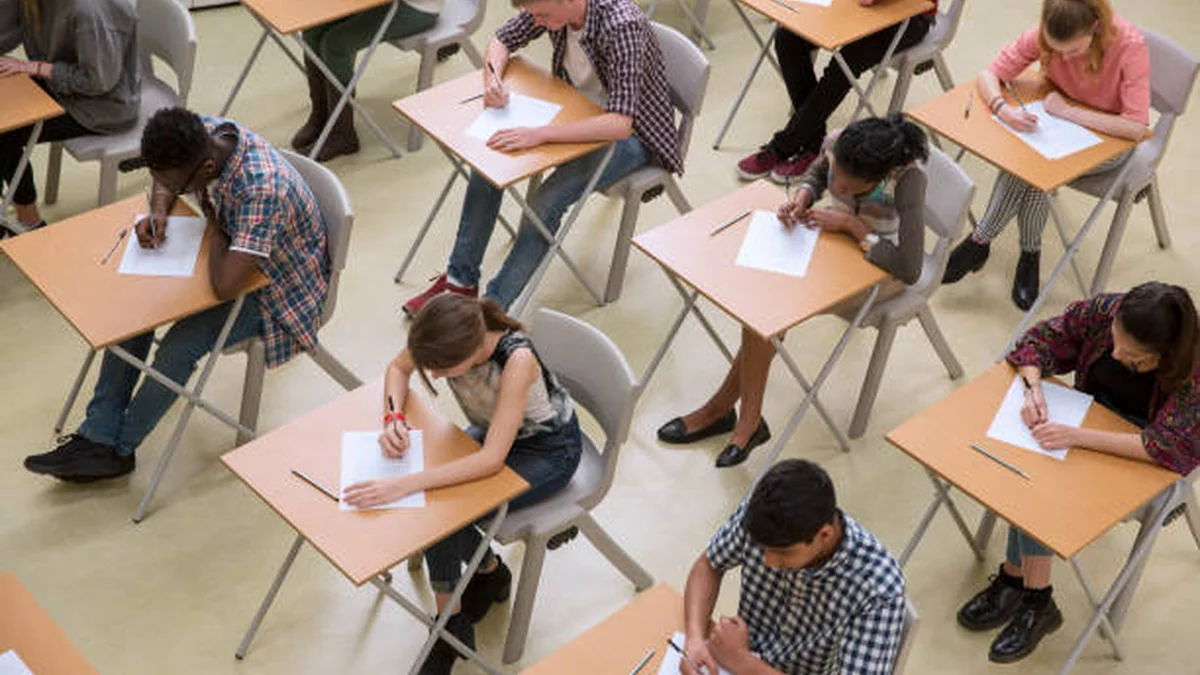
What do I need for finals? That’s the question every student ends up asking at 7 a.m. on exam day, standing in their room double-checking their bag. That moment of doubt costs more students points than a hard question ever does.
Quick answer: For most finals you need a valid photo ID or admission ticket, two pens or pencils, an approved calculator if your subject allows one, a water bottle, a watch without alarms, and light layers of clothing. Leave phones, smartwatches, and unauthorized notes at home — they’re grounds for dismissal at nearly every testing center.
That’s the short version. Here’s what actually matters once you dig into the details, subject by subject and rule by rule.
What Do I Need for Finals? The Full Bring List
Start with documents, because a missing document can keep you out of the room entirely — no exceptions, no matter how well you know the material.
- Photo ID or admission ticket. Most schools and testing centers ask for a government-issued ID or a school-issued ID; some standardized tests require a printed admission ticket that matches your registration name exactly.
- Two pens and two pencils. Bring a backup of each. A dead pencil mid-essay is a solvable problem only if you planned for it.
- Eraser and sharpener, especially for multiple-choice or diagram-heavy exams.
- Approved calculator, if your course allows one — check your syllabus or exam instructions first, since not every calculator model is permitted.
- Water bottle. Dehydration is a quiet performance killer; a full bottle costs you nothing and protects your focus for a three-hour block.
- A simple watch with no alarm and no smart features, useful when the room has no visible clock.
- Layers. Testing rooms run cold as often as they run warm, and a hoodie you can add or remove beats sitting uncomfortable for two hours.
- Any accommodations paperwork, if you have approved extended time or other arrangements — bring the letter, not just the memory of the conversation.
For a fully digital final delivered through a platform like Bluebook, add a charged laptop or tablet, your login credentials, and a charging cable, since a dead battery is treated the same as a missing pencil: your problem to solve, not the proctor’s.
What You Should Leave at Home (Banned Items)
This list matters as much as the “bring” list, because most disqualifications come from someone carrying a banned item, not from a wrong answer.
- Phones, smartwatches, and any wearable tech — even powered off, most centers confiscate them on sight.
- Unauthorized notes or reference sheets, unless your instructor explicitly designated the exam as open-book or open-note.
- Earbuds, headphones, or Bluetooth devices of any kind.
- Food or drink beyond an approved water bottle, in exams that don’t allow snacks at the desk.
- Bags, backpacks, or personal items at your seat — most rooms require you to store these at the front or in a locker.
- Calculators not on your exam’s approved list. A calculator with a QWERTY keyboard or programmable memory is banned in nearly every standardized and professional exam, even if it’s fine for regular class use.
If you’re unsure whether something counts as banned, the safe move is to leave it in your bag or your car rather than risk it at your desk.
Calculator & Digital Exam Rules
Calculator policy is the single most inconsistent rule across different finals, so don’t assume your usual calculator is fine.
| Exam type | Typical calculator rule |
|---|---|
| High school/college in-class final | Whatever your instructor specifies on the syllabus |
| AP exams | Approved graphing/scientific models only, subject-specific |
| SAT | Your own approved calculator, or the on-screen Bluebook calculator |
| Professional/licensing exams (FE, FRM) | Strict approved list only — proctor inspects it before you sit down |
Whatever the exam, replace the batteries the night before and pack a spare set. A calculator dying at minute forty of a math final is one of the most avoidable disasters in exam season.
The Night Before: Your Prep Checklist
The night before finals should feel almost boring. That’s the goal.
- Pack your bag completely — ID, stationery, calculator, water bottle — and set it by the door.
- Confirm the exam time, room, and format (in-person, digital, open-book) so you’re not guessing in the morning.
- Do light review only. Skim formulas, key terms, or a summary sheet — don’t try to learn new material this late.
- Set two alarms. One is never enough on the night your brain decides to run through worst-case scenarios at 2 a.m.
- Get 7–8 hours of sleep if you can. Sleep is when your brain consolidates what you studied; an all-nighter trades short-term cramming for the memory work that actually shows up on the test.
Morning-Of Routine: Timing, Food, and Mindset
- Eat something with protein and slow-burning carbs — eggs, oatmeal, or peanut butter toast beats sugary cereal, which spikes energy and then drops it mid-exam.
- Skip anything new. Exam morning is not the time to try a food or drink you’ve never had before.
- Arrive 30–45 minutes early. That buffer absorbs traffic, a long check-in line, or a wrong-building mix-up without touching your actual start time.
- Avoid last-minute cramming in the hallway. Studies on test performance consistently show that morning-of cramming adds stress without adding recall.
- Have one calm-down phrase ready. Something as plain as “I prepared for this” works better than trying to think of something in the moment.
Quick Takeaway: Pack the night before, sleep before you cram, eat something familiar, and arrive early enough that a delay doesn’t become a crisis. Everything else on this list supports those four habits.
If You Forget Something or Something Goes Wrong
Even with a checklist, things go sideways. Here’s what actually helps in the moment:
- Forgot your ID? Tell the proctor immediately rather than trying to sneak in — many centers have a backup verification process, but only if you ask before the exam starts.
- Calculator won’t turn on? Ask if a proctor-provided calculator or a neighbor’s spare is allowed; don’t assume the answer without asking.
- Running late? Call the exam office or professor as you’re en route. Some finals allow a grace period; showing up quietly late without warning is the version that costs you the most.
- Panic hits mid-exam? Put your pencil down, take five slow breaths, and reread the question. A sixty-second reset rarely costs you meaningful time and often saves the rest of the section.
What Do I Need for Finals? The Bottom Line
Most exam-day stress isn’t about the material — it’s about logistics. A packed bag, a charged calculator, a decent night’s sleep, and a 30-minute buffer solve the majority of “what if” scenarios before they happen. Build your checklist tonight, not tomorrow morning, and walk in with one less thing to think about.
Find out exactly what score you need with our grade calculator.
FAQ Section
What do I need to bring to a final exam?
Most finals require a photo ID or admission ticket, two pens or pencils, an approved calculator if allowed, a water bottle, and a watch without alarms. Always confirm subject-specific rules with your instructor or testing center first.
What items are not allowed in a final exam?
Phones, smartwatches, unauthorized notes, earbuds, and calculators not on the approved list are banned at nearly every testing center, even if they’re powered off or unused.
Can I bring a calculator to my final exam?
Only if your exam allows it and your model is on the approved list. Rules vary widely by subject and testing organization, so check before exam day, not during check-in.
What should I eat before a final exam?
A breakfast with protein and slow-burning carbs, like eggs or oatmeal, works better than sugary food. Stick to foods you already eat regularly rather than trying something new.
What time should I arrive for a final exam?
Aim for 30–45 minutes before the start time. That buffer covers traffic, check-in lines, or a wrong-room mix-up without cutting into your actual exam time.
What happens if I forget my ID for an exam?
Tell the proctor or exam coordinator immediately. Many centers have a backup verification process, but it only works if you flag the issue before the exam begins.
Can I bring notes to an open-book final?
Only if your instructor explicitly says the exam is open-book or open-note. Bringing notes to a closed-book exam, even accidentally, can be treated as an academic integrity violation.
Is studying the morning of a final exam a good idea?
Generally no. Light review of formulas or key terms is fine, but last-minute cramming tends to raise stress without improving recall at that point.
