

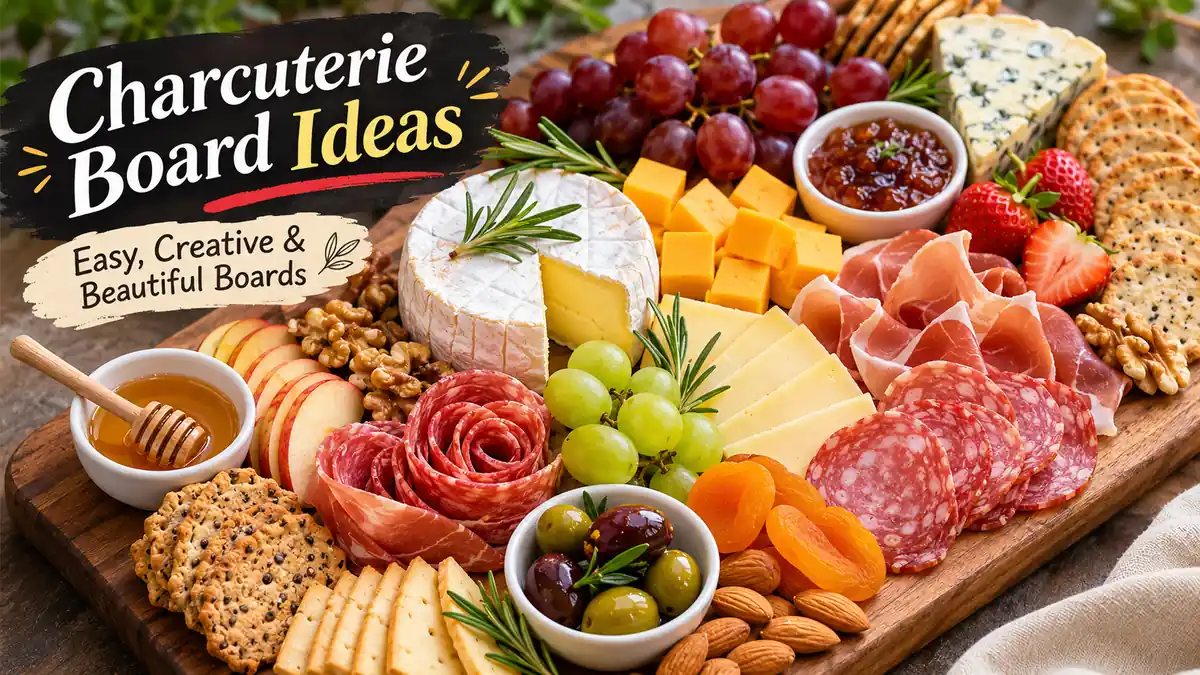
A beautiful charcuterie board doesn’t require expensive ingredients or professional food-styling skills. The secret is choosing foods that complement one another and arranging them so guests can easily build their own delicious combinations.
From a simple cheese and cracker platter to an elaborate holiday grazing board, there are countless ways to create something memorable.
The best charcuterie board ideas combine a variety of cheeses, cured meats, crackers, fresh fruits, nuts, spreads, and colorful garnishes. Start with three cheeses, two meats, and a handful of complementary foods. Arrange larger items first, fill the spaces with smaller ingredients, and balance sweet, salty, creamy, and crunchy flavors.
What Is a Charcuterie Board?
A charcuterie board is a platter traditionally centered on prepared meats such as salami, prosciutto, pâté, and other cured or preserved meat products.
The word charcuterie comes from French culinary traditions involving prepared and preserved meats.
Today, the term is frequently used more broadly to describe grazing boards featuring cheese, crackers, fruit, vegetables, dips, and sweet treats.
Strictly speaking, a cheese-only platter is a cheese board rather than a traditional charcuterie board. However, modern entertaining has blurred that distinction.
What Makes a Great Charcuterie Board?
The most appealing boards offer contrasts in flavor, texture, appearance, and temperature.
| Element | Examples | Purpose |
|---|---|---|
| Cheese | Brie, cheddar, gouda, goat cheese | Creamy, tangy, and savory flavors |
| Cured meats | Salami, prosciutto, soppressata | Salty, rich protein |
| Crackers and bread | Crostini, water crackers, baguette | Crunch and structure |
| Fresh fruit | Grapes, strawberries, apples | Sweetness and freshness |
| Dried fruit | Apricots, figs, dates | Concentrated sweetness |
| Nuts | Almonds, walnuts, pistachios | Crunch and richness |
| Pickled foods | Cornichons, olives, pickled onions | Acidity and contrast |
| Spreads | Fig jam, honey, mustard | Complementary flavor pairings |
You don’t need every ingredient category on every board. A smaller, thoughtfully arranged selection often looks more inviting than an overcrowded platter.
15 Creative charcuterie board ideas for Any Occasion
The most useful charcuterie board ideas are adaptable. You can change the ingredients according to your guests, the season, dietary needs, and available serving space.
1. Classic Meat and Cheese Charcuterie Board
A classic board is an excellent starting point because it introduces several complementary flavors without requiring complicated preparation.
Use:
- Aged cheddar for a firm, sharp cheese
- Brie for a soft, creamy option
- Gouda for a mild, buttery flavor
- Genoa salami and prosciutto
- Water crackers and sliced baguette
- Red grapes and dried apricots
- Marcona almonds, olives, and fig jam
Fold prosciutto into loose ribbons rather than laying each slice flat. Arrange salami in overlapping curves to create movement across the platter.
Place the cheeses in separate areas and use the smaller foods to connect them visually.
2. Budget-Friendly Charcuterie Board
An affordable board can look generous without using specialty cheeses or imported meats.
Choose supermarket ingredients that work in several combinations:
- One block of cheddar
- One package of sliced salami
- One affordable soft cheese
- Plain crackers
- Seasonal apples or grapes
- Carrot sticks and cucumber
- Popcorn or roasted peanuts
- A small bowl of mustard
Cut some cheddar into cubes and leave another portion in thin slices. This creates visual variety without increasing the number of ingredients.
Budget tip: Spend more on one standout ingredient and use affordable seasonal produce to fill the remaining space.
3. Mini Charcuterie Boards for Individual Guests
Individual grazing boards are practical for small gatherings, picnics, and events where guests prefer their own portions.
A miniature board might include two cheese varieties, several slices of cured meat, three or four crackers, a few berries, and a small serving of nuts.
Use small plates, shallow trays, or food-safe wooden boards.
Keep moist foods in miniature cups to prevent crackers from becoming soggy.
For larger events, individual charcuterie cups offer a similar experience without requiring a separate plate for every guest.
4. Italian-Inspired Charcuterie Board
An Italian-inspired antipasto board emphasizes cured meats, cheeses, olives, and marinated vegetables.
Consider combining:
- Prosciutto di Parma
- Genoa salami
- Soppressata
- Parmigiano Reggiano
- Fresh mozzarella
- Marinated artichoke hearts
- Roasted red peppers
- Castelvetrano olives
- Grissini breadsticks
Add cherry tomatoes and fresh basil for color.
A little extra-virgin olive oil can accompany the mozzarella, while balsamic glaze provides a sweet-tart accent.
This style works particularly well as an appetizer before pasta or another Italian-inspired meal.
5. French-Inspired Cheese and Charcuterie Board
For a French-inspired arrangement, focus on quality cheeses, traditional cured meats, and simple accompaniments.
Try Brie or Camembert, Comté, saucisson sec, pâté, cornichons, Dijon mustard, and slices of crusty baguette.
Fresh pears, walnuts, and grapes help balance the richer flavors.
Serve pâté with a dedicated knife and keep it appropriately chilled until serving.
Avoid overwhelming the board with too many spreads. A few carefully selected accompaniments allow the individual cheeses and meats to stand out.
6. Holiday Christmas Charcuterie Board
A Christmas board becomes festive through its colors and arrangement rather than requiring entirely different ingredients.
Use green grapes, rosemary sprigs, red strawberries, dried cranberries, white cheeses, and cured meats.
For a Christmas tree design:
- Arrange ingredients in progressively wider horizontal rows.
- Place smaller clusters of grapes and cheese near the top.
- Alternate red, green, and neutral-colored foods.
- Use crackers or breadsticks to suggest the tree trunk.
- Add a star-shaped cheese cutout at the top.
Rosemary can provide a decorative evergreen appearance. Use clean, food-safe sprigs and avoid placing nonedible decorations directly against the food.
7. Thanksgiving Harvest Charcuterie Board
Thanksgiving grazing boards are especially appealing when they feature autumn produce.
Combine sharp cheddar, smoked gouda, sliced turkey, salami, apples, pears, dried figs, pecans, and cranberry spread.
A small bowl of pumpkin hummus or spiced cream cheese can introduce another seasonal flavor.
Use warm orange, golden, brown, and deep red tones.
If the board is served before a large Thanksgiving dinner, keep portions modest so guests can enjoy the main meal.
8. Valentine’s Day Charcuterie Board
A Valentine’s Day board can use heart-shaped ingredients and a red-and-pink color palette.
Choose strawberries, raspberries, red grapes, soft cheese, salami, chocolate-covered treats, and heart-shaped crackers.
Use a small cookie cutter to create cheese hearts from slices of cheddar or another firm cheese.
For a savory centerpiece, fold salami slices into a rose-shaped arrangement.
Balance sweet additions with salty ingredients so the platter remains a satisfying appetizer rather than becoming exclusively a dessert board.
9. Summer Fruit and Cheese Board
Summer boards benefit from juicy fruit, lighter cheeses, and fresh herbs.
Pair mozzarella, burrata, goat cheese, or mild gouda with peaches, watermelon, strawberries, blueberries, and grapes.
Add prosciutto for a salty contrast.
Fresh mint and basil can brighten the arrangement, while honey or a light balsamic drizzle complements selected cheeses.
Because cut melon and soft cheeses are perishable, assemble this board shortly before serving and keep it chilled until guests arrive.
10. Mediterranean Vegetarian Grazing Board
A vegetarian grazing board can be just as colorful and satisfying as a meat-centered platter.
Use hummus, tzatziki, feta, olives, cucumber, cherry tomatoes, roasted peppers, stuffed grape leaves, pita wedges, and falafel.
Add fresh herbs, lemon wedges, and toasted chickpeas.
For guests who avoid animal-derived rennet, check cheese labels and select suitable vegetarian cheeses.
This arrangement is particularly convenient when you need a substantial meat-free appetizer.
11. Breakfast and Brunch Charcuterie Board
A brunch board transforms familiar breakfast foods into an attractive shared meal.
Include mini pancakes, waffles, croissants, hard-boiled eggs, cheese, smoked salmon, fresh berries, and sliced fruit.
Serve maple syrup, cream cheese, and jam in separate bowls.
Arrange pancakes and waffles in small stacks, then place the fruit between them.
Keep hot breakfast foods at safe serving temperatures, and avoid leaving eggs, dairy products, or smoked fish unrefrigerated for extended periods.
12. Dessert Charcuterie Board
A dessert grazing board is ideal for birthdays, movie nights, and celebrations.
Combine bite-sized brownies, cookies, chocolate squares, strawberries, marshmallows, pretzels, and small pastries.
Use chocolate ganache, caramel, or fruit dip as the centerpiece.
A dessert board benefits from varying textures: crisp cookies, soft cake, fresh fruit, and crunchy pretzels.
If you want to avoid excessive sweetness, include tart berries and lightly salted nuts.
13. Kid-Friendly Snack Board
A children’s snack board should emphasize familiar foods, easy portions, and age-appropriate textures.
Try mild cheese cubes, small sandwiches, crackers, soft fruit, cucumber slices, and simple dips.
For young children, modify foods to reduce choking risks. Cut grapes lengthwise into quarters, avoid whole nuts for children under five, and adapt hard or round foods to the child’s developmental abilities.
Keep allergen concerns in mind, particularly at parties where you may not know every child’s dietary restrictions.
14. Game Day Charcuterie Board
Game day boards work best when guests can grab snacks without utensils.
Choose cheddar cubes, salami, pepperoni, pretzels, crackers, mini sandwiches, pickles, and vegetables.
Offer mustard, ranch dip, and hummus in small bowls.
Arrange the board in distinct zones so people can quickly find their preferred snacks.
For a sports-themed presentation, use a football-shaped serving tray or arrange ingredients in team colors.
15. Fall and Winter Cozy Charcuterie Board
Cold-weather boards can feature deeper flavors and heartier ingredients.
Use aged gouda, blue cheese, smoked cheddar, dried figs, dates, walnuts, rosemary crackers, and apple butter.
Add sliced pears and a small bowl of honey.
For a warming contrast, serve a separate dish of baked Brie alongside the board. Keep hot foods separate from chilled cured meats and cheeses so each can be held at a safe temperature.
The result feels seasonal without requiring elaborate decoration.
How to Make a Charcuterie Board Step by Step
Once you’ve chosen a theme, assembling the board is surprisingly straightforward.
The key is to build around the largest ingredients and work toward the smallest.
Step 1: Choose the Right Board
You can use a wooden cutting board, slate platter, ceramic serving dish, or large food-safe tray.
A rectangular board offers space for long rows of crackers and folded meats. Round boards are particularly attractive for smaller gatherings.
Make sure the surface is clean, suitable for direct food contact, and large enough to leave some room around the ingredients.
If you’re preparing food in advance, choose a board that fits inside your refrigerator.
Step 2: Select Three Different Cheeses
A useful starting combination includes one soft cheese, one firm cheese, and one distinctive cheese.
For example:
- Soft: Brie, Camembert, or goat cheese
- Firm: Cheddar, gouda, or Manchego
- Distinctive: Blue cheese, smoked gouda, or aged Gruyère
This approach provides variety without requiring a large cheese selection.
Place the cheeses in different areas of the board rather than grouping them together.
Step 3: Add Two or Three Cured Meats
Salami and prosciutto are popular because they offer contrasting textures.
Other possibilities include capicola, bresaola, soppressata, and mortadella.
Fold thin slices into ribbons, quarters, or loose rosettes.
Arrange the meats near cheeses that complement their flavors.
For example, creamy Brie balances the saltiness of salami, while prosciutto pairs nicely with mozzarella and melon.
Step 4: Position Bowls and Spreads
Use small ramekins for ingredients that might spill or make neighboring foods soggy.
Good choices include:
- Honey
- Fig jam
- Whole-grain mustard
- Olives
- Cornichons
- Hummus
Position these bowls in different areas to create visual anchors.
Step 5: Add Crackers and Bread
Choose at least two contrasting options, such as plain water crackers and seeded crackers.
Sliced baguette, crostini, pita chips, and breadsticks also work well.
Arrange crackers in overlapping rows or curved lines.
Keep additional crackers nearby rather than overcrowding the board.
Step 6: Fill Gaps With Fruit, Nuts, and Vegetables
Use grapes, berries, apple slices, dried apricots, almonds, and olives to fill remaining spaces.
Distribute colors across the board instead of placing every red or green ingredient in one location.
Smaller foods are particularly useful for creating a full appearance.
Step 7: Finish With Garnishes
Fresh rosemary, basil, thyme, and mint can add subtle color.
Keep garnishes simple and food-safe.
Before serving, check that each cheese has an appropriate knife and that guests can reach the ingredients without disturbing the entire arrangement.
Best Charcuterie Board Ingredients and Flavor Pairings
A board becomes more enjoyable when ingredients work together rather than simply looking attractive.
The following combinations offer reliable starting points.
| Cheese | Complementary meat | Fruit or spread | Crunchy addition |
|---|---|---|---|
| Brie | Prosciutto | Fig jam | Plain crackers |
| Sharp cheddar | Salami | Apple slices | Pretzels |
| Goat cheese | Bresaola | Honey | Walnuts |
| Manchego | Chorizo | Quince paste | Almonds |
| Gouda | Soppressata | Pear slices | Seeded crackers |
| Blue cheese | Prosciutto | Fresh figs | Pecans |
| Mozzarella | Prosciutto | Melon | Crostini |
These pairings are suggestions, not strict culinary rules. Personal preferences should guide the final selection.
Which Crackers Are Best for Charcuterie Boards?
Plain crackers are versatile because they don’t overpower the cheese.
Water crackers are especially suitable for delicate cheeses such as Brie and Camembert.
Seeded crackers add texture and work well with stronger cheeses.
Crostini provides a sturdy base for spreads, pâté, and soft cheeses.
For guests avoiding gluten, choose clearly labeled gluten-free crackers and keep them separate from wheat-based products.
What Fruits Go Well With Cheese and Cured Meat?
Fresh grapes, apples, pears, strawberries, and figs are popular choices.
Grapes complement both mild and strong cheeses. Apples offer a crisp contrast to creamy varieties, while pears work particularly well with blue cheese.
Dried apricots, dates, and figs provide concentrated sweetness.
Avoid placing very juicy cut fruit directly beside crackers because moisture can soften them.
What Can Replace Cured Meat?
A charcuterie-style board doesn’t need to include pork or other cured meats.
Alternatives include roasted turkey, smoked salmon, grilled vegetables, marinated tofu, falafel, and roasted chickpeas.
For a vegetarian board, combine several protein-rich ingredients with cheeses, hummus, nuts, and whole-grain crackers.
For a vegan grazing board, use plant-based cheeses, bean dips, olives, vegetables, fruit, and nuts.
Check ingredient labels for dairy, honey, gelatin, and other animal-derived ingredients when preparing a fully vegan platter.
How Much Food Do You Need for a Charcuterie Board?
Portion planning depends on whether the board is a light appetizer or the main food at a gathering.
For an appetizer, a practical starting point is approximately 2 ounces of cheese and 2 ounces of cured meat per adult, along with crackers, fruit, and other accompaniments. Actual needs vary with appetite and the rest of the menu. Food Network+1
Charcuterie Board Serving Size Chart
| Guests | Cheese | Meat | Crackers or bread |
|---|---|---|---|
| 2 | 4 oz | 4 oz | 8–12 pieces |
| 4 | 8 oz | 8 oz | 16–24 pieces |
| 6 | 12 oz | 12 oz | 24–36 pieces |
| 8 | 16 oz | 16 oz | 32–48 pieces |
| 10 | 20 oz | 20 oz | 40–60 pieces |
| 12 | 24 oz | 24 oz | 48–72 pieces |
These are approximate appetizer quantities, not fixed requirements.
If the charcuterie board replaces a meal, increase the portions and include substantial foods such as sandwiches, bread, vegetables, or additional protein.
For large gatherings, several smaller boards are often easier to manage than one oversized platter.
How Big Should Your Charcuterie Board Be?
For two to four people, a medium serving board is usually sufficient.
For six to eight people, a larger rectangular platter provides more room for ingredient clusters.
For parties with ten or more guests, consider using multiple serving boards.
The goal is to create enough space for guests to reach the food without knocking neighboring ingredients onto the table.
Easy charcuterie board ideas for Beginners
If you’re making your first board, don’t start with twenty ingredients.
A simple combination can be both attractive and satisfying.
The Easy 3-2-2 Formula
Choose:
- Three cheeses: cheddar, Brie, and gouda
- Two meats: salami and prosciutto
- Two fruits: grapes and strawberries
Then add crackers, a small bowl of olives, and a handful of almonds.
This creates a balanced board with relatively little preparation.
Simple Charcuterie Board for Two
For a quiet evening, try one small wedge of Brie, a few slices of salami, a handful of crackers, sliced pear, and some walnuts.
Use a small wooden board or ceramic plate.
A compact arrangement often looks more intentional than spreading a few ingredients across an oversized platter.
Charcuterie Board Without Cheese
For dairy-free guests, build a platter around cured meats, olives, roasted vegetables, fresh fruit, hummus, and crackers.
Include several textures to compensate for the absence of creamy cheese.
A dairy-free dip made from white beans or roasted red peppers can provide richness.
Charcuterie Board Without Meat
Use cheeses, nuts, fruit, vegetables, dips, and crackers.
A combination of goat cheese, aged cheddar, hummus, roasted almonds, grapes, cucumber, and pita chips makes a satisfying vegetarian option.
The broader grazing-board format allows you to adapt the ingredients without losing the visual appeal.
Charcuterie Board Presentation Tips
Good presentation isn’t about arranging every ingredient perfectly. It’s about creating a board that looks inviting and is easy to eat from.
Use Contrasting Colors
Combine red grapes with green olives, pale cheeses, golden crackers, and dark dried fruit.
Avoid placing too many similar-colored foods next to each other.
Create Different Heights
Stack crackers, fold cured meats, and use small bowls to add dimension.
A few upright breadsticks can create height without making the arrangement unstable.
Leave Some Breathing Room
Although abundant boards are attractive, overcrowding makes it difficult for guests to pick up individual ingredients.
Leave a little space around bowls and cheese knives.
Repeat Ingredients in Different Areas
Instead of placing every grape in one corner, divide them into two or three clusters.
Repeat nuts or dried fruit near different cheeses to encourage pairing.
Use a Focal Point
A small wheel of Brie, a bowl of colorful olives, or a carefully arranged salami rose can act as the centerpiece.
Build the remaining ingredients around it.
How to Prepare a Charcuterie Board Ahead of Time
Preparing ingredients ahead can reduce the work required immediately before guests arrive.
The safest and most practical approach is to prepare components separately, refrigerate perishable foods, and finish assembling the board close to serving time.
The Day Before
Wash and dry fruit, cut firm cheeses, prepare dips, and portion nuts or dried fruit.
Store perishable ingredients in covered containers in the refrigerator.
Keep crackers and bread in dry storage.
A Few Hours Before Serving
Arrange the cheeses, cured meats, and bowls on the board.
Cover and refrigerate the platter.
Keep delicate fresh fruit and crunchy ingredients separate until shortly before serving.
Immediately Before Serving
Add crackers, sliced apples or pears, fresh herbs, and other finishing ingredients.
Put out serving utensils and extra crackers.
If the gathering lasts several hours, replenish the board with fresh refrigerated portions rather than displaying all the perishable food at once.
Charcuterie Board Food Safety and Storage
Food safety deserves as much attention as appearance, particularly when serving meat, cheese, seafood, and dairy-based dips.
How Long Can a Charcuterie Board Sit Out?
Perishable foods generally should not remain at room temperature for more than two hours. If the surrounding temperature exceeds 90°F (32°C), the limit drops to one hour. McCormick+1
Some shelf-stable cured meats, crackers, dried fruit, and nuts have different storage requirements. Check product labels rather than assuming every cured meat is safe unrefrigerated.
Prevent Cross-Contamination
Use clean boards, knives, and serving utensils.
Provide separate utensils for different dips and cheeses.
Keep allergen-containing ingredients clearly identified, especially nuts, dairy, wheat, and sesame.
For guests with serious food allergies, a separate preparation and serving area may be necessary to prevent cross-contact.
Store Leftovers Properly
Refrigerate perishable leftovers promptly if they have remained within safe serving-time limits.
Discard foods that have exceeded those limits rather than returning them to the refrigerator.
Keep leftover crackers separate from moist foods to preserve their texture.
Common Charcuterie Board Mistakes to Avoid
Even attractive boards can be disappointing when flavor, serving convenience, or food safety is overlooked.
Using Too Many Strong Flavors
A platter filled entirely with blue cheese, spicy meats, and intensely flavored pickles can overwhelm guests.
Include mild cheeses, plain crackers, and fresh fruit for balance.
Forgetting About Dietary Restrictions
Ask about allergies and dietary preferences before choosing ingredients.
Provide vegetarian, gluten-free, or dairy-free options when appropriate.
Choosing Only One Texture
A board containing mostly soft cheeses and meats may feel monotonous.
Add crisp vegetables, crunchy crackers, and nuts.
Using an Oversized Board
A large board with relatively little food can look unfinished.
Choose a smaller serving surface or create compact ingredient clusters.
Adding Crackers Too Early
Crackers can absorb moisture from fruit, cheese, and dips.
Add them close to serving time or provide them in a separate basket.
Making Everything Difficult to Serve
Large cheese blocks, tangled meat slices, and tightly packed ingredients can frustrate guests.
Pre-slice some firm cheeses and arrange meats so individual portions are easy to lift.
How to Make a Healthier Charcuterie Board
A lighter grazing board can still offer plenty of flavor.
Focus on fresh produce, whole grains, modest portions of cured meats, and a variety of protein sources.
Penn State Extension recommends emphasizing fruits, vegetables, whole grains, and leaner protein choices when creating a more balanced board. Penn State Extension+1
Try replacing part of the cured meat selection with roasted chickpeas, lean turkey, or grilled vegetables.
Choose unsalted or lightly salted nuts when possible, and include fresh fruit instead of relying entirely on sweet spreads.
For guests monitoring sodium intake, offer lower-sodium ingredients and limit heavily salted meats, cheeses, olives, and pickles.
The goal isn’t to remove every indulgent ingredient. It’s to create a variety of options that guests can enjoy according to their preferences.
Final Thoughts on charcuterie board ideas
The most successful charcuterie boards are built around variety, balance, and thoughtful presentation.
Start with a few complementary cheeses, meats, crackers, fruits, and spreads. Choose a theme that fits your occasion, arrange larger ingredients first, and use colorful smaller foods to complete the display.
You don’t need an expensive serving board or a long ingredient list to create something appealing.
For your next gathering, try the simple three-cheese, two-meat combination, then experiment with seasonal ingredients and creative layouts as you become more comfortable.
A well-planned charcuterie board should look beautiful, taste delicious, and make sharing food feel effortless.
